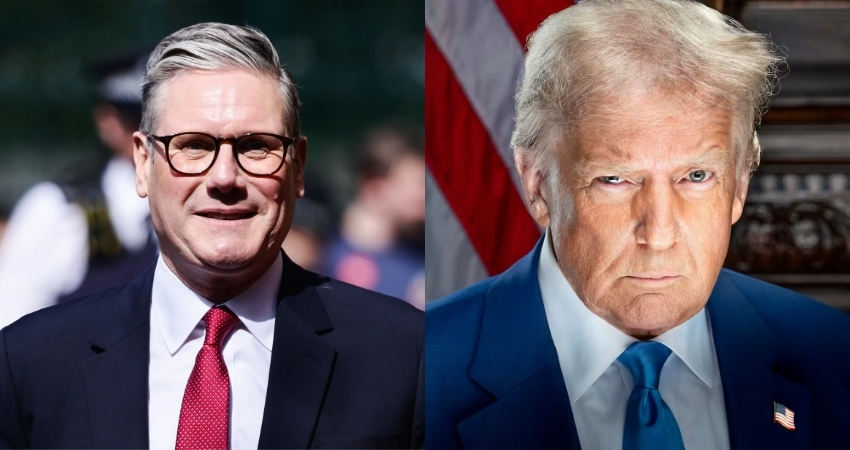
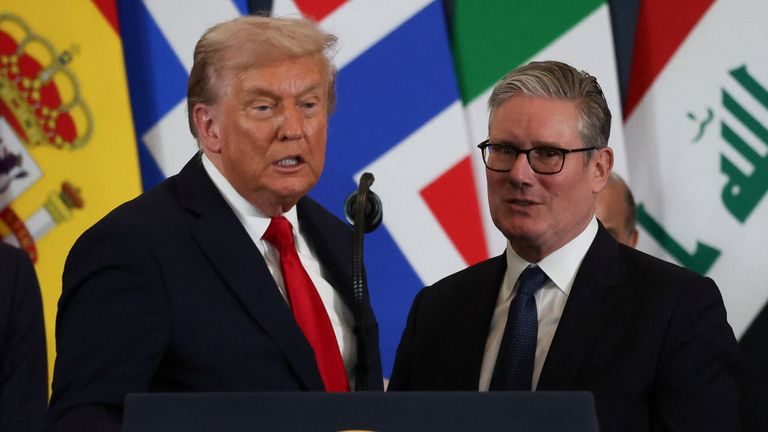
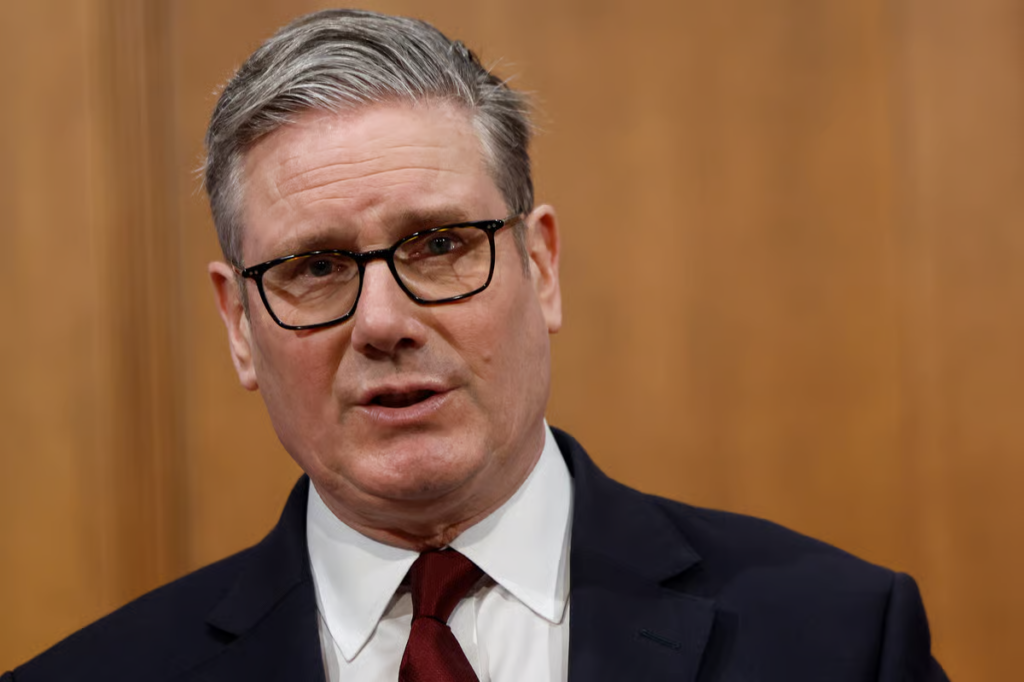
Ministers have reportedly been urging Donald Trump not to criticise Sir Keir Starmer over Labour’s proposed social media ban.
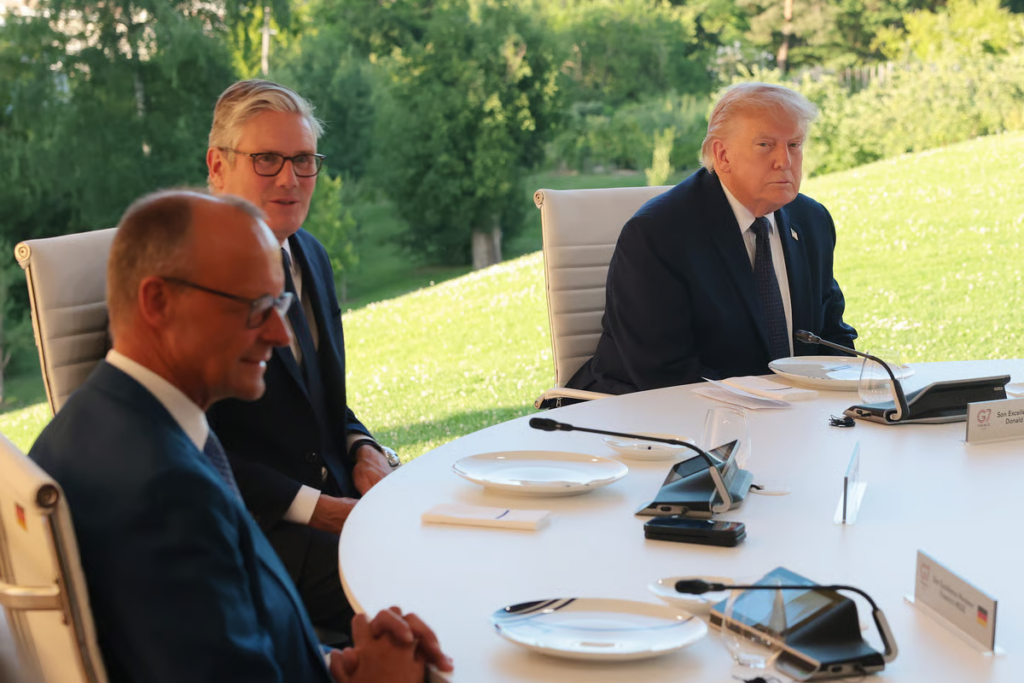
Both leaders are currently in France for the G7 Summit, following what is understood to be an extensive lobbying effort by Labour figures aimed at preventing backlash from the White House.
Ministers said they had spent weeks reassuring US officials that the ban was not specifically targeting American tech companies.
The proposal would restrict access to platforms such as X, YouTube, Facebook, Snapchat and TikTok for under-16s.
All of those platforms except X and TikTok are American-owned, and each is headquartered in the US.
The President has previously warned Britain could face a “big tariff” if the Government refuses to scrap its digital services tax.
A source involved in the lobbying effort told The Guardian that ministers adopted a three-part strategy to “engage the companies, brief the administration early and challenge misinformation in the media.”
“This is about protecting children in Britain, not attacking US tech,” the source said.
But Elon Musk, owner of X and the world’s first trillionaire, criticised the move on his platform, writing: “This censorship law is a wolf in sheep’s clothing. The real goal is to let the UK Government track everyone.”
He also branded Britain a “police state.”
Meanwhile, Sarah Rogers of the State Department has become a leading voice in US criticism of Labour’s internet restrictions.
She recently said the US Government’s new free speech portal had been flooded with complaints from Britons alleging censorship at home.
The newly launched freedom.gov website — created to help bypass overseas “hate speech” restrictions — has reportedly received a surge of complaints from UK users.
Sir Keir said he last spoke to Mr Trump on Saturday, before unveiling the ban.
At the G7, he is expected to discuss the social media crackdown along with several other issues of interest to world leaders.
One of those leaders, Emmanuel Macron, thanked Britain for “joining the movement” on banning social media.
Earlier this week, Canada also proposed its own crackdown, introducing plans to regulate AI chatbots and curb harmful online content through a new regulator.
Back in January, France passed legislation in both chambers to ban social media for under-15s, with implementation expected before the new school year in September.
This meeting will mark the first face-to-face encounter between Sir Keir and Mr Trump since the US President’s controversial “no Churchill” remark, although Trump has yet to directly comment on the ban.
The White House, however, made its position clear last week in a statement released via the American Embassy in London.
It said Washington supported “narrowly targeted requirements” focused mainly on pornographic and adult commercial content, rather than broad social media bans.
That position was also submitted during the UK Government’s consultation.
Back in Britain, critics including Ian Russell — whose 14-year-old daughter took her own life after viewing harmful online content — described the ban as “politically convenient” and told The Telegraph it felt rushed.
Russell has urged the Government to target specific harmful content related to suicide, self-harm and eating disorders, rather than impose a blanket ban.
Sir Keir rejected claims the policy had been rushed, insisting the consultation had been handled carefully, while adding he would continue working with Russell on the concerns raised.
A spokesperson for Meta, which owns Facebook and Instagram, warned: “As seen in Australia, bans risk isolating teenagers from online communities and information, while pushing them toward unregulated alternatives with fewer safeguards.”
A spokesperson for YouTube added: “Blanket bans risk forcing children away from curated, supervised and beneficial online spaces, and toward anonymous services that may be less safe.”