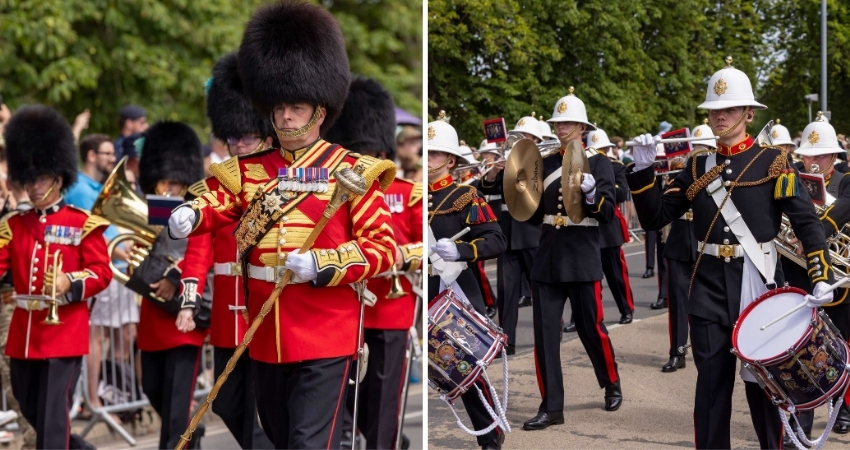
Britain’s servicemen, veterans and cadets have taken to the streets of Aldershot as the country marks Armed Forces Day.
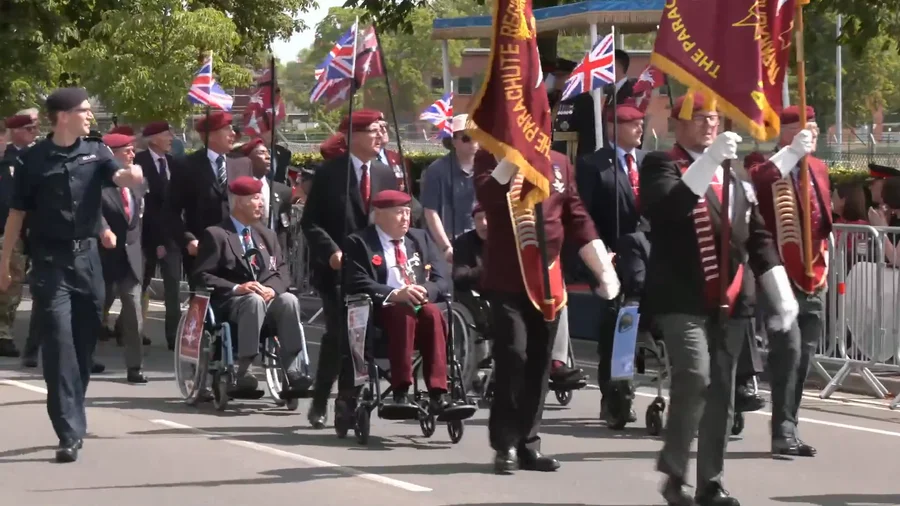
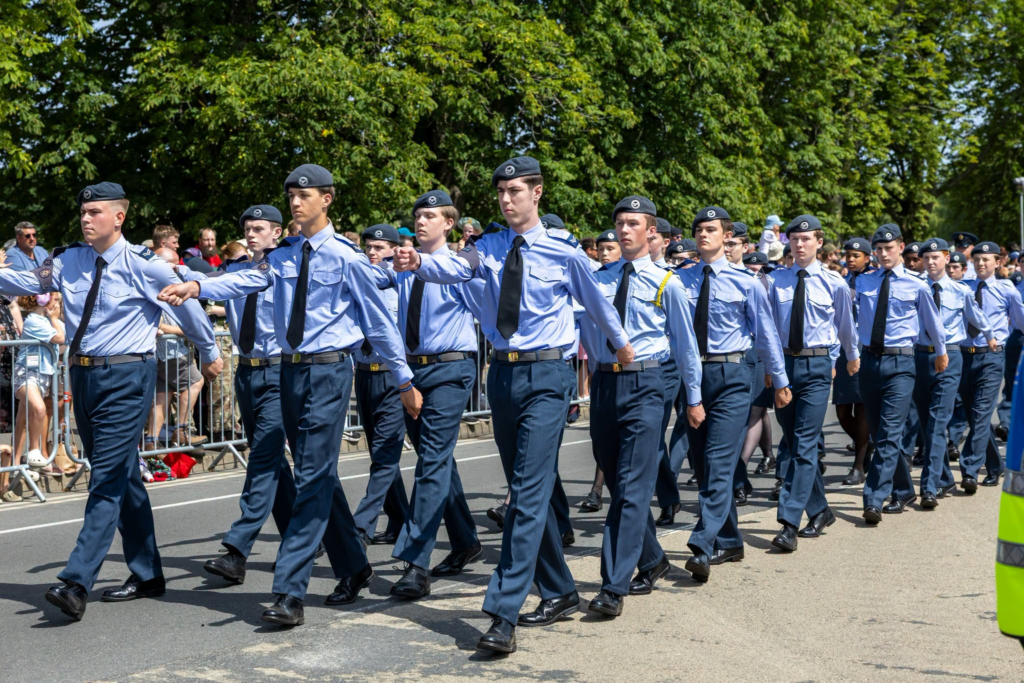
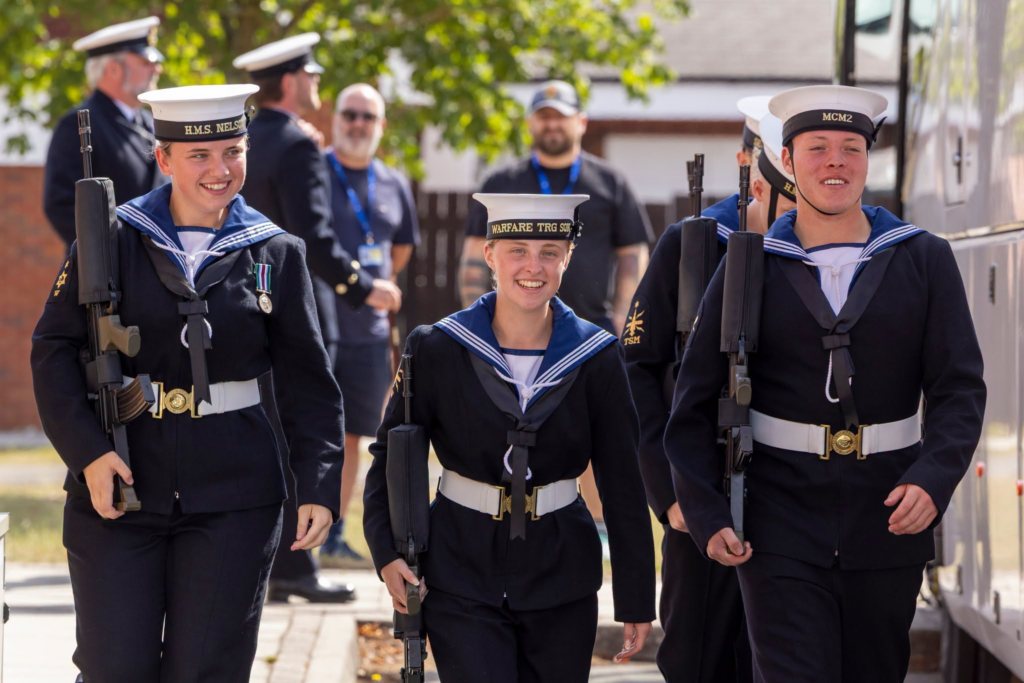
Representatives from the past, present and future of the UK’s military were on display in full ceremonial dress, set against warm Hampshire weather.
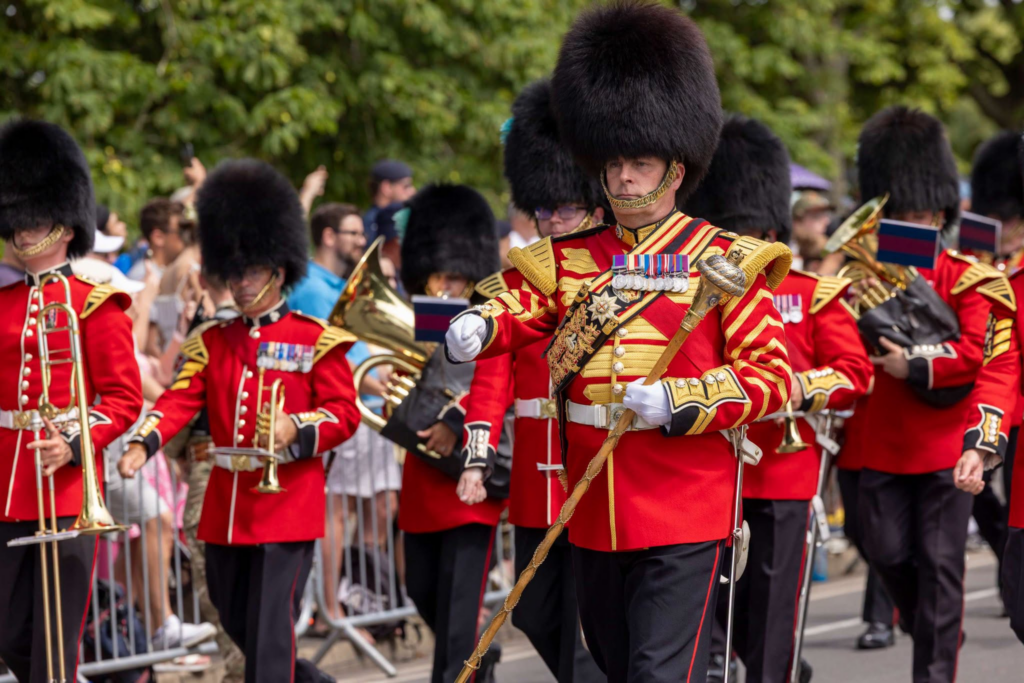
The parade, supported by military brass bands, was reviewed by Chief of the Defence Staff Air Marshal Sir Richard Knighton.
Bands from the Royal Navy, Royal Marines, British Army and Royal Air Force all took part, each leading columns of serving personnel, cadets and veterans.
The Third Battalion of the Parachute Regiment also marched down Queen’s Avenue, as an A400M Atlas transport aircraft carried out a flypast overhead.
Held on the final Saturday of June, Armed Forces Day brings Armed Forces Week to a close. First introduced in 2009, it replaced Veterans’ Day, which had been launched three years earlier.
The event was later widened to recognise not only former service personnel but also those currently serving in the Royal Navy, British Army and Royal Air Force.
The week typically begins with Reserves Day on Wednesday and continues with parades, flypasts, displays and community events across the country.
One town or city is selected each year to host the main national celebration, while hundreds of smaller events take place nationwide.
Local councils, charities and veterans’ groups also run their own commemorations, including town parades, remembrance services, flag-raising ceremonies and family days.
Military bases and museums often open to the public for the occasion, showcasing historic vehicles, aircraft and equipment.
Businesses and public bodies frequently offer discounts for members of the Armed Forces community, while schools and community groups hold lessons and assemblies about the military’s role.
Speaking at the Aldershot event, GB News’s Charlie Peters spoke to former Royal Marines Commando Aldo Kane.
“Days like this are about raising awareness with the public — we are still here, we are still existing, and we’re still keeping you safe,” Kane said.
He added that the day should go beyond remembering those lost in conflict.
“It’s remembering those that have fallen, but also those that are still alive and dealing with their own struggles,” he said.
“And it doesn’t just stop there. Once they finish their service, they often feel like they’re forgotten.”