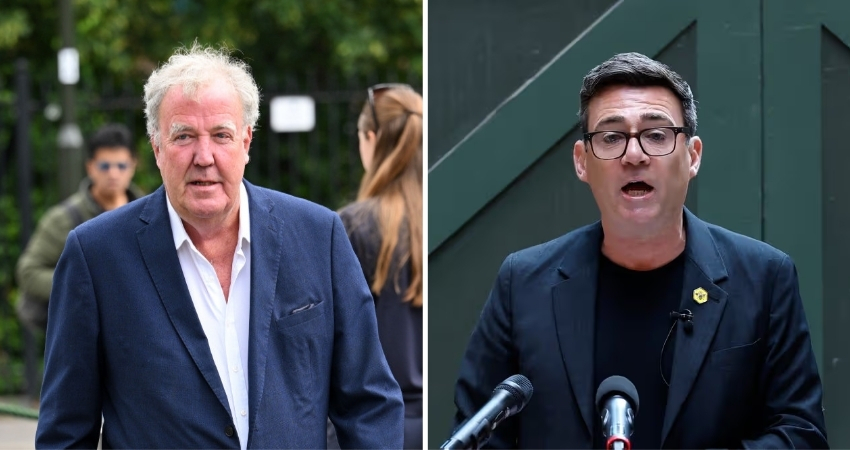
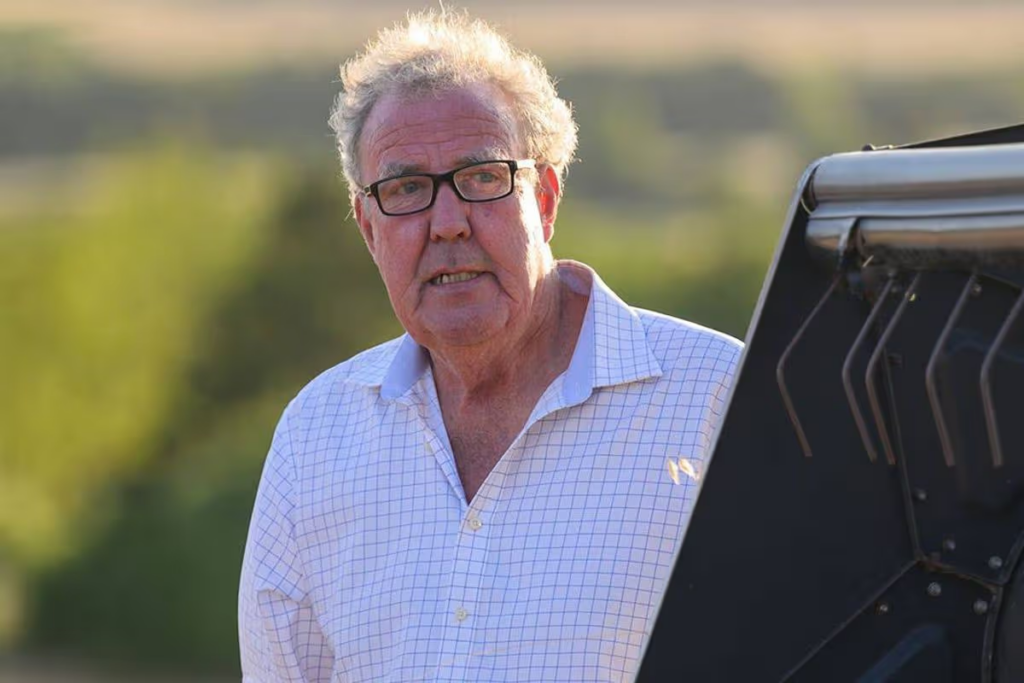
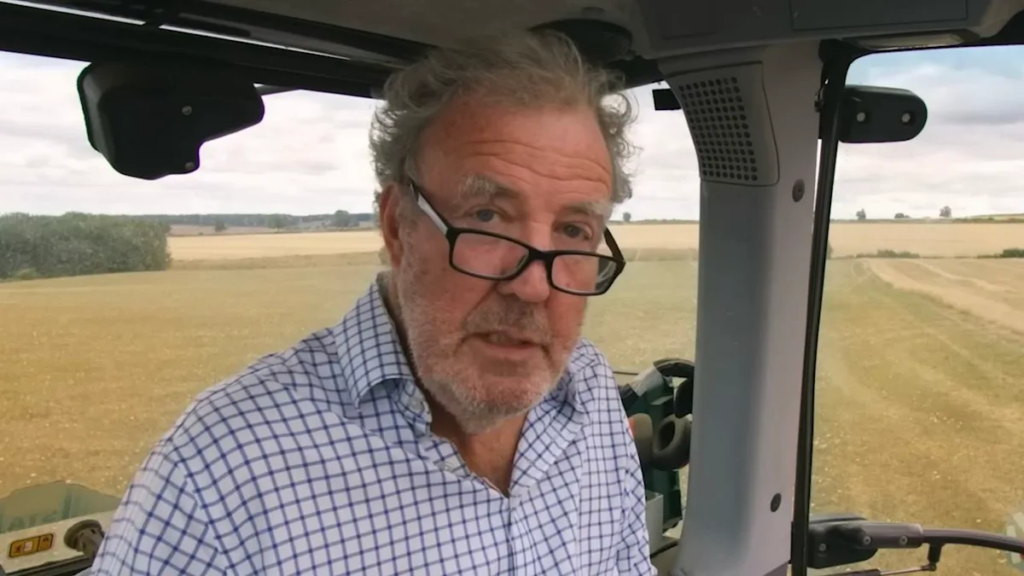
Jeremy Clarkson has weighed in on the future of the Labour Party, suggesting that Andy Burnham could be just weeks away from replacing Keir Starmer as prime minister.
Keir Starmer announced his resignation outside Downing Street earlier this month. If no challenger emerges to oppose Burnham’s expected leadership bid, the newly elected MP for Makerfield could be on course to enter Downing Street as soon as July 20.
Clarkson has never hidden his criticism of the outgoing prime minister since he took office, and throughout Starmer’s time in power he has consistently been outspoken.
In the latest series of Clarkson’s Farm, for example, he even placed an effigy of Starmer on a bonfire in protest over proposed inheritance tax changes affecting farmers. He has also described the PM as “stupid” over his response to the Iran conflict, labelled new driving rules as evidence of a “nanny state”, and accused him of “destroying the countryside”.
But despite his clear disapproval of Starmer, Clarkson has now said he is not much more optimistic about his likely successor.
Posting on X, he responded to a user who asked: “Do you think Andy Burnham will be worse than Starmer?”
His reply was blunt: “Yes.”
The comment came just hours after Burnham delivered what his team called “the foundational text” of his programme for government, setting out wide-ranging plans to shift power away from Westminster and toward the regions.
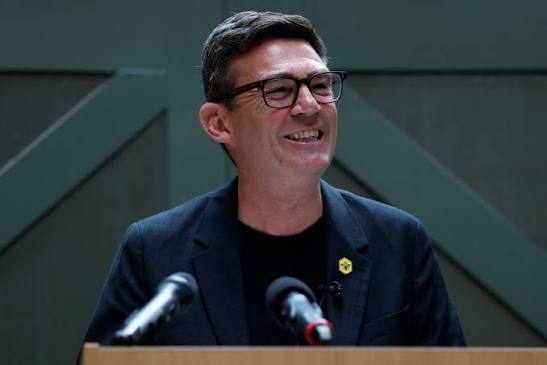
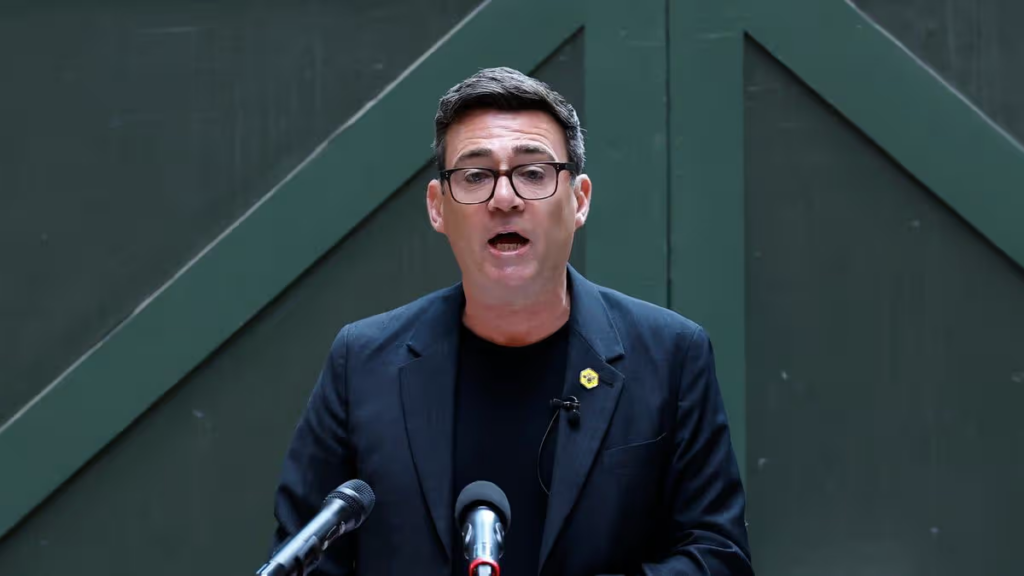
Speaking at the People’s History Museum in Manchester, Burnham outlined plans for a “No 10 North” operation based in the city, which he said would drive the biggest transfer of power from Whitehall in modern political history.
“The time has come to build the broadest possible coalition of people to lift Britain back up to where we all want it to be,” he told the audience.
Burnham argued that Westminster had failed the country since the 2008 financial crash, leaving it “stuck in a rut” and dominated by “finger-pointing political point-scoring”.
The Manchester hub would act as what he called “the nerve centre of a rewired Britain”, extending decision-making powers not just to the North, but also to the Midlands, South West, East of England and London.
He also pledged to deepen devolution in Scotland, Wales and Northern Ireland, saying people in places like Dundee and Bangor often feel just as distant from Holyrood and the Senedd as they do from Westminster.
A key theme of his plan is what he calls “Manchesterism”, a governing philosophy shaped during his years as Greater Manchester mayor.
“It comes from having the power at ground level to make a real difference, from a clear shared vision that everyone can understand, and investors can back,” he said.
The approach stresses stronger public finances, improved infrastructure, and targeted public investment to drive regeneration in towns and cities.
Burnham also promised the largest council housebuilding programme since the post-war era, arguing that the housing crisis is having a “ruinous impact” on the country’s finances.
Under the proposals, “No 10 North” would focus on three main areas: reforming essential utilities, reindustrialisation, and local regeneration. Regions could gain greater control over services such as water, energy and transport, while London could receive expanded powers over areas like education and housing.
Setting out a long-term plan to raise living standards over the next decade, Burnham drew on his experience of battling Whitehall bureaucracy during his time as mayor, insisting he would not allow other regions to face the same frustrations.
“I am simply not prepared to accept the same for any area,” he said, promising closer cooperation between government departments and local authorities to speed up decision-making.
Sadiq Khan welcomed the speech, saying Burnham “gets it” when it comes to empowering mayors and ensuring London’s success benefits the whole country, while adding he would still challenge any incoming leader if policies clashed with the capital’s interests.