Young people are being killed on the streets of Europe, and many people feel this reflects deeper failures in immigration policy, border management, and political decision-making that they believe has not prioritised public safety strongly enough.
There is growing anger over policing standards and governments that, in the eyes of critics, have not dealt properly with underlying issues. People look at the news and their own communities and start to question whether the places they grew up in still feel familiar or secure. For many, the sense is that something has gone seriously wrong.

On 19 June, Louis, a 17-year-old French boy, was lured to a construction site in Narbonne and beaten so severely that he later died in hospital.
The attackers filmed the incident. Reports that circulated widely described the group as having North African backgrounds, although French authorities have said the suspects were local youths known to Louis through child welfare placements and have stated that no racial motive has been established. The full details remain disputed, but the case has added to wider tensions and debate across the country.
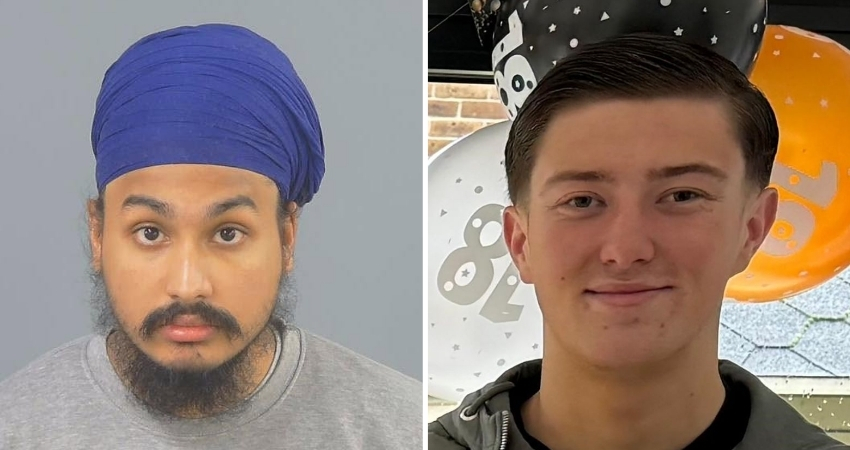
Henry Nowak’s death in Southampton last December also left a deep impact. The 18-year-old university student was walking home after a night out when he was stabbed five times with a ceremonial dagger by Vickrum Singh Digwa. When police arrived, Digwa allegedly claimed Henry had racially abused him. Bodycam footage later showed officers handcuffing Henry as he lay injured on the pavement, repeatedly saying he had been stabbed and could not breathe.
The initial focus on the allegation of racial abuse has since been heavily criticised, with some arguing it distracted from the urgency of his medical condition. The case has become part of a wider debate about policing priorities and fairness, and it has not faded from public discussion.

Rhiannon Whyte’s murder is also frequently cited in the same context. She had just finished a shift at a hotel in Walsall where a Sudanese man had been housed after arriving on a small boat. He followed her to a train station and stabbed her with a screwdriver. She was a young mother heading home to her son. Critics of the policy argue that housing asylum seekers in hotels created avoidable risks, while others point to wider failures in safeguarding and support systems.
The grooming gang scandals years earlier revealed similarly serious institutional failings. In places such as Rotherham, Rochdale, and Oxford, groups of men groomed and exploited vulnerable girls over many years. Public inquiries found that authorities had evidence but, in some cases, failed to act effectively. The reasons cited included poor judgement, systemic failures, and concerns about community relations, which contributed to victims not being protected.
Of course, most migrants who arrive in Europe do so peacefully and do not commit crimes. However, critics argue that repeated high-profile cases highlight gaps in policy and enforcement that have not been properly addressed. At the same time, communities have often felt excluded from decisions that reshape their local areas, which has added to frustration and mistrust.
Across Europe, countries such as Sweden, Germany, the Netherlands, and Italy are continuing to debate how to manage migration alongside rising concerns about crime and integration. Mainstream parties in many places have long argued that current approaches can work with the right support systems, while others believe tougher restrictions are needed. As a result, political pressure has grown and trust in established positions has declined.
Ultimately, governments still have the power to change direction. They can review housing policies, adjust deportation rules for foreign offenders, and ensure policing standards are applied consistently regardless of background. Critics argue that too often governments focus on managing public concern rather than addressing its causes.
Many believe meaningful change will only come if political priorities shift significantly in the years ahead.
These cases—Louis, Henry Nowak, and Rhiannon Whyte—have become symbols in a much larger debate. They are not just headlines, but personal tragedies that continue to shape public anger and concern about safety, policy, and accountability.
And for many people, the central question remains unresolved: how many more lives will be lost before governments find a way to restore trust and ensure public safety is treated as the top priority?