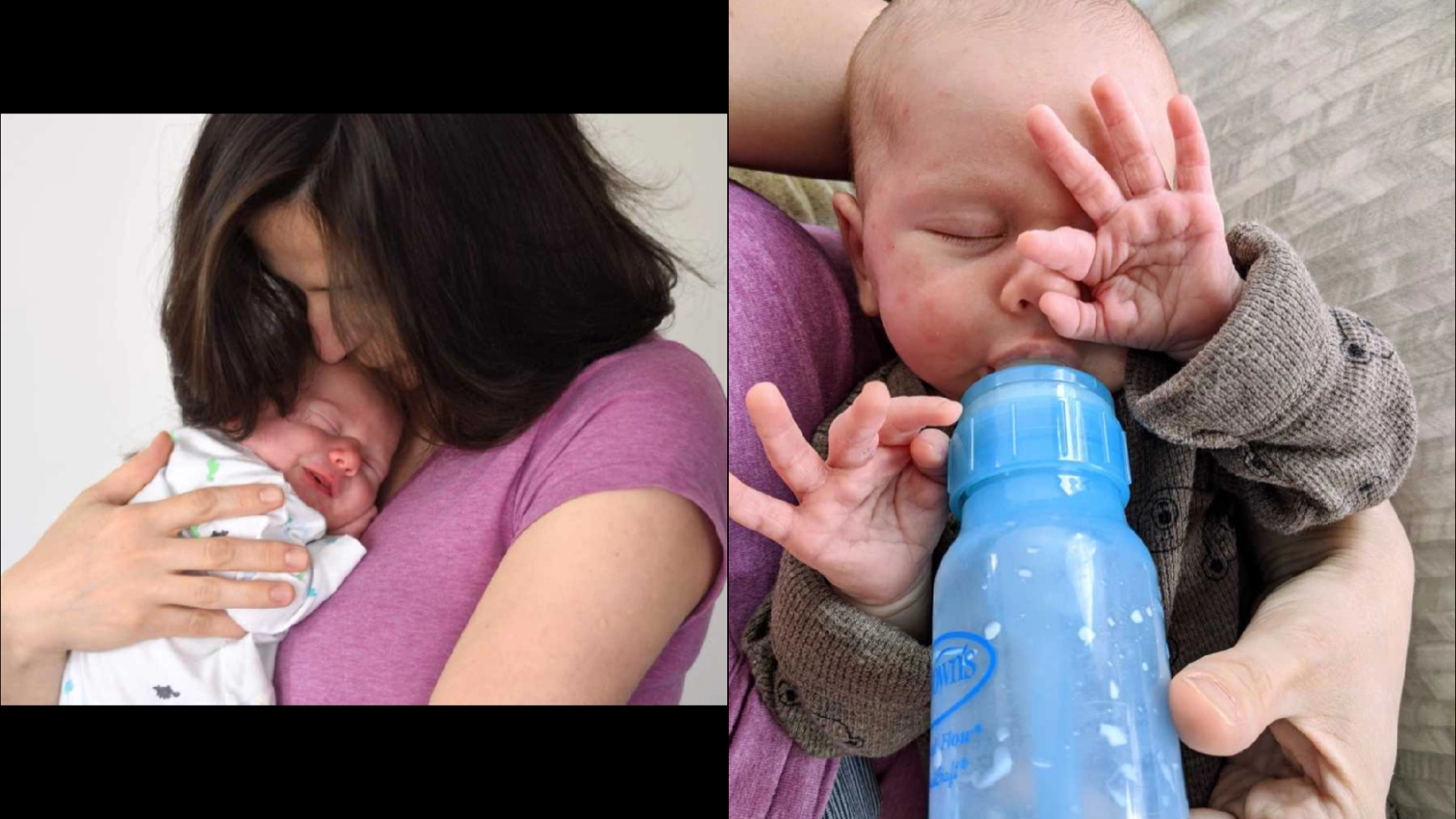
Right after Nina was born, she couldn’t latch properly, but I was able to pump enough colostrum to feed her and hope for breastfeeding.
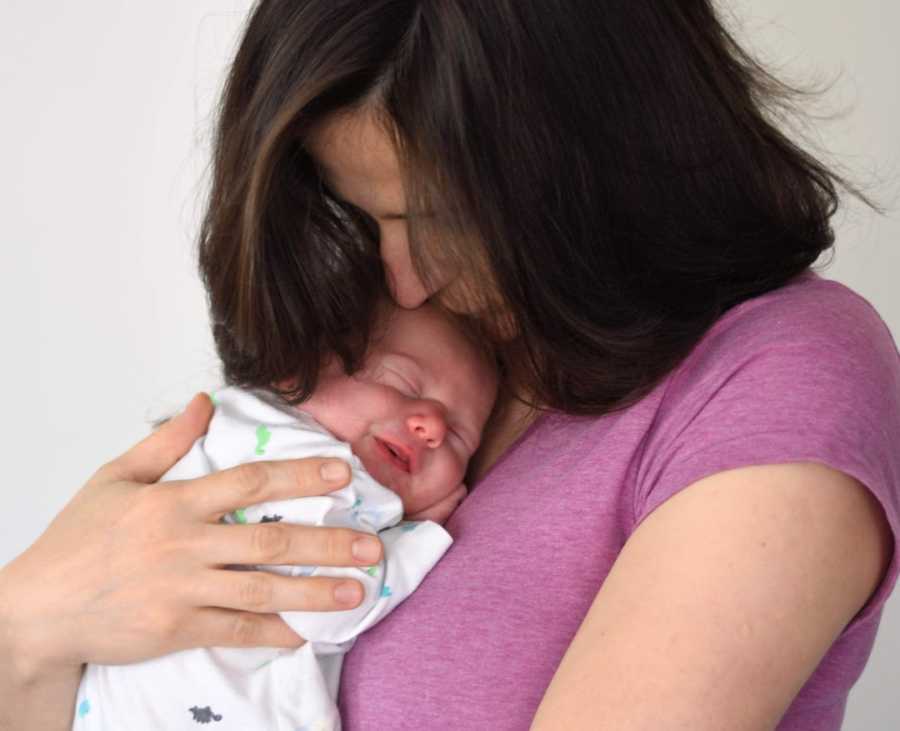
The following day, one of my midwives came to visit us at home. It would have been a phone conversation because of Covid, but since I had troubles with breastfeeding, she decided to come and see us in person. She had full protective clothes on, gloves, a mask, a face shield – oh what a strange world we live in these days! I tried nursing with her help again, it worked for a very short period, then Nina would just come off or would start falling asleep on the job. That’s when I began to cry.
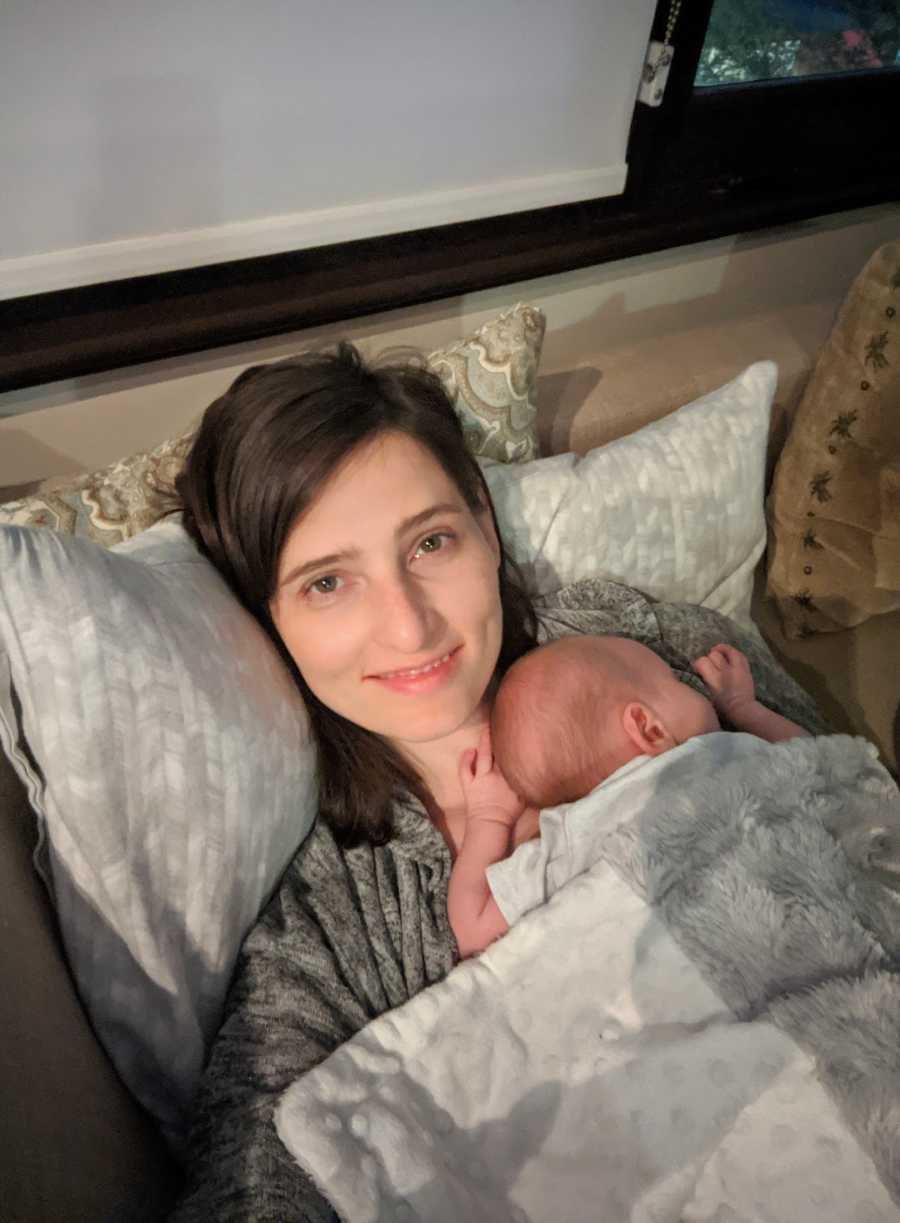
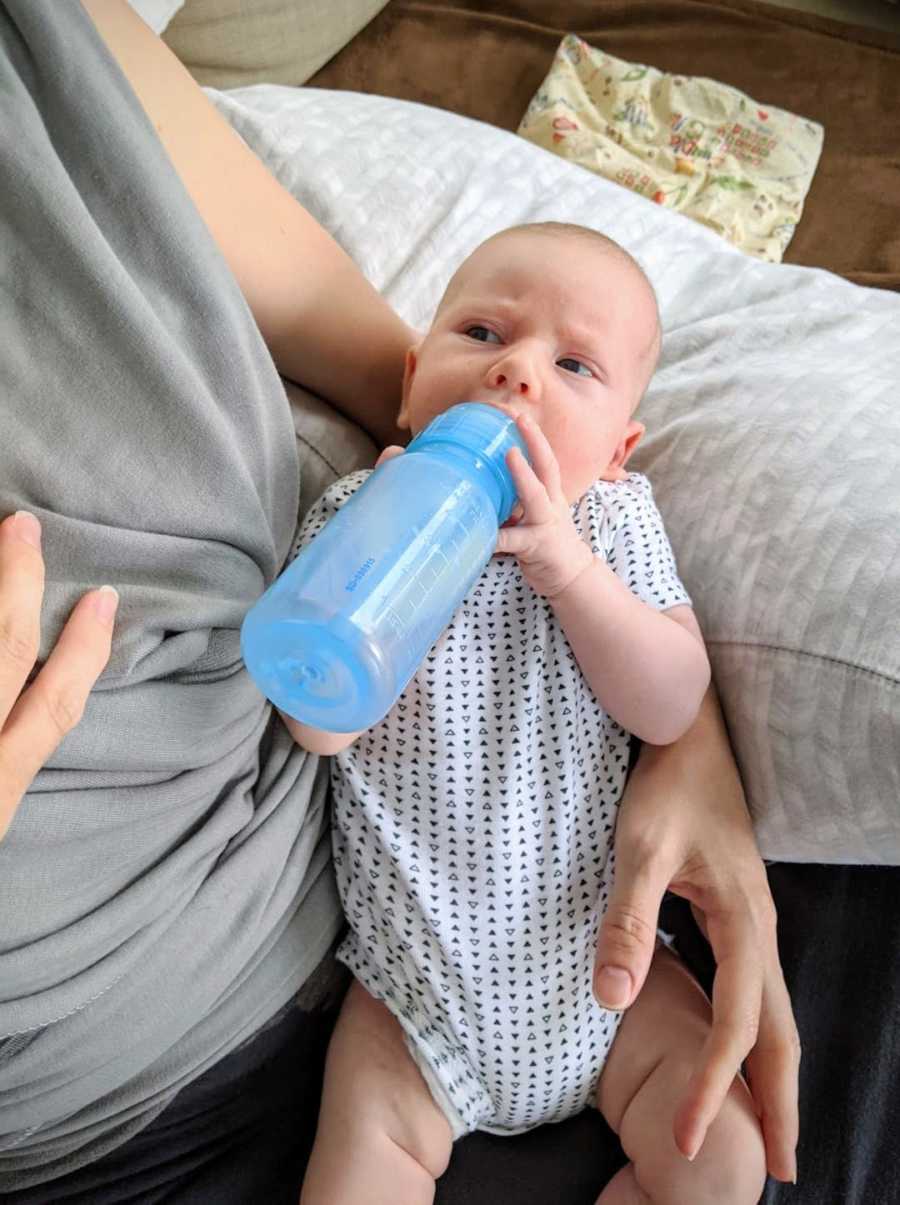
I struggled to breastfeed my daughter, feeling guilty and lost, and had to rely on pumping and a nipple shield while learning there was nothing wrong with me, just challenging we had to work through.
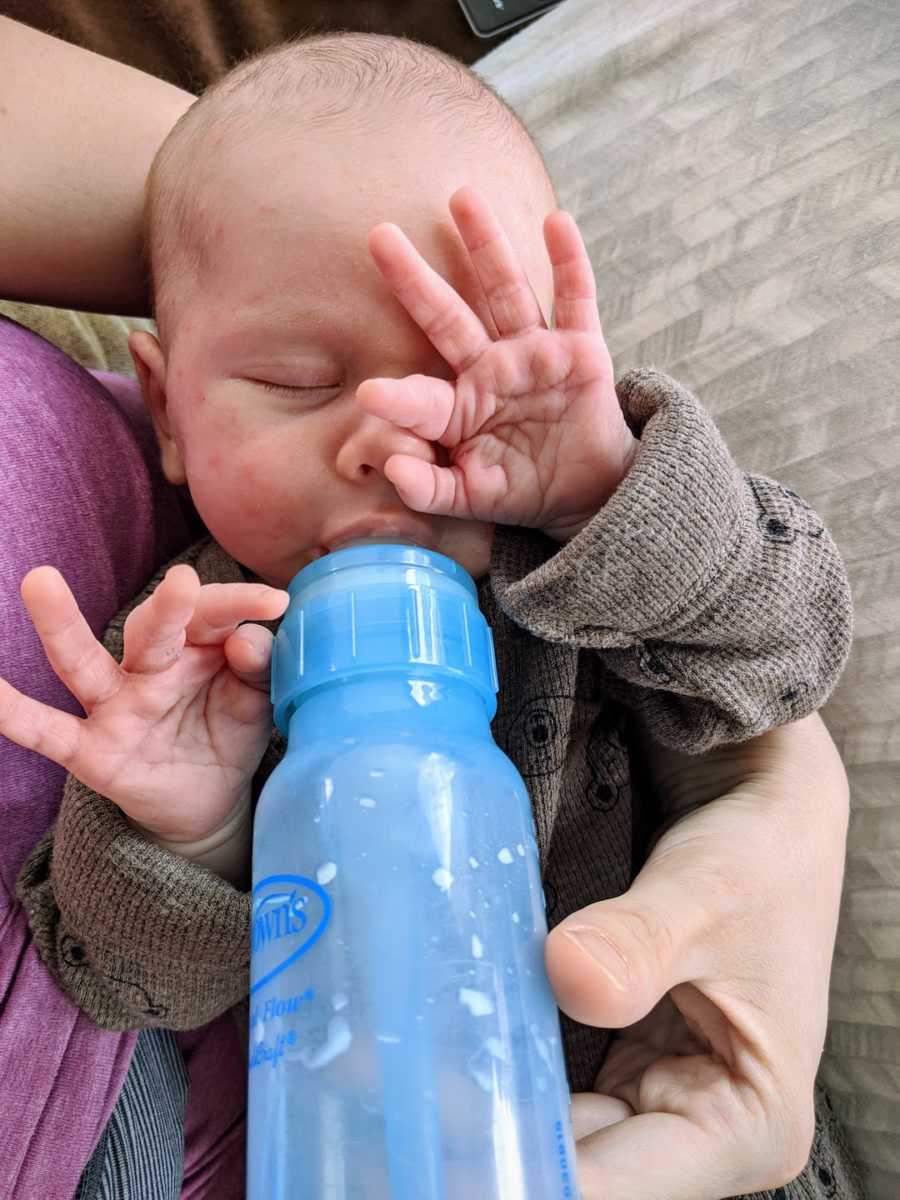
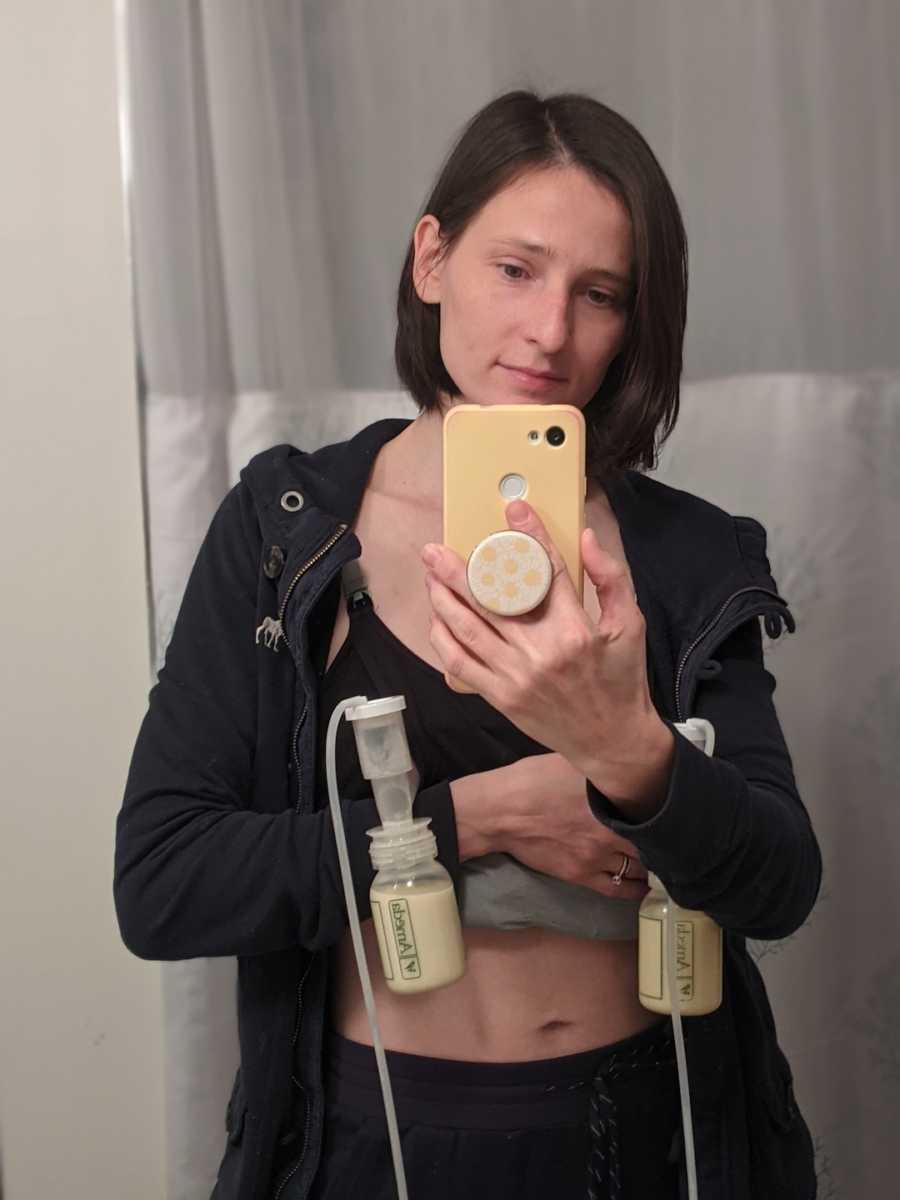
The lack of sleep, inability to breastfeed my daughter, switching to exclusive pumping, being in isolation due to coronavirus all that quickly piled up and made me feel that I was incapable of being the mother I wanted to be. I was swimming in a pool of anxiety. I was not ready to accept breastfeeding was outside of my control. I was jealous of moms on social media whose motherhood and breastfeeding looked easy and flawless.I wanted to be one of those moms. It took a few therapy sessions to get me out of that state of mind and to ensure I would not develop postpartum depression. I was pumping every 5-6 hours, day and night. Everything revolved around my pumping schedule because when it is time to pump, it is time to pump. After about 4 weeks of pumping with a rented pump, I ended up buying my own pump as it made more sense financially.
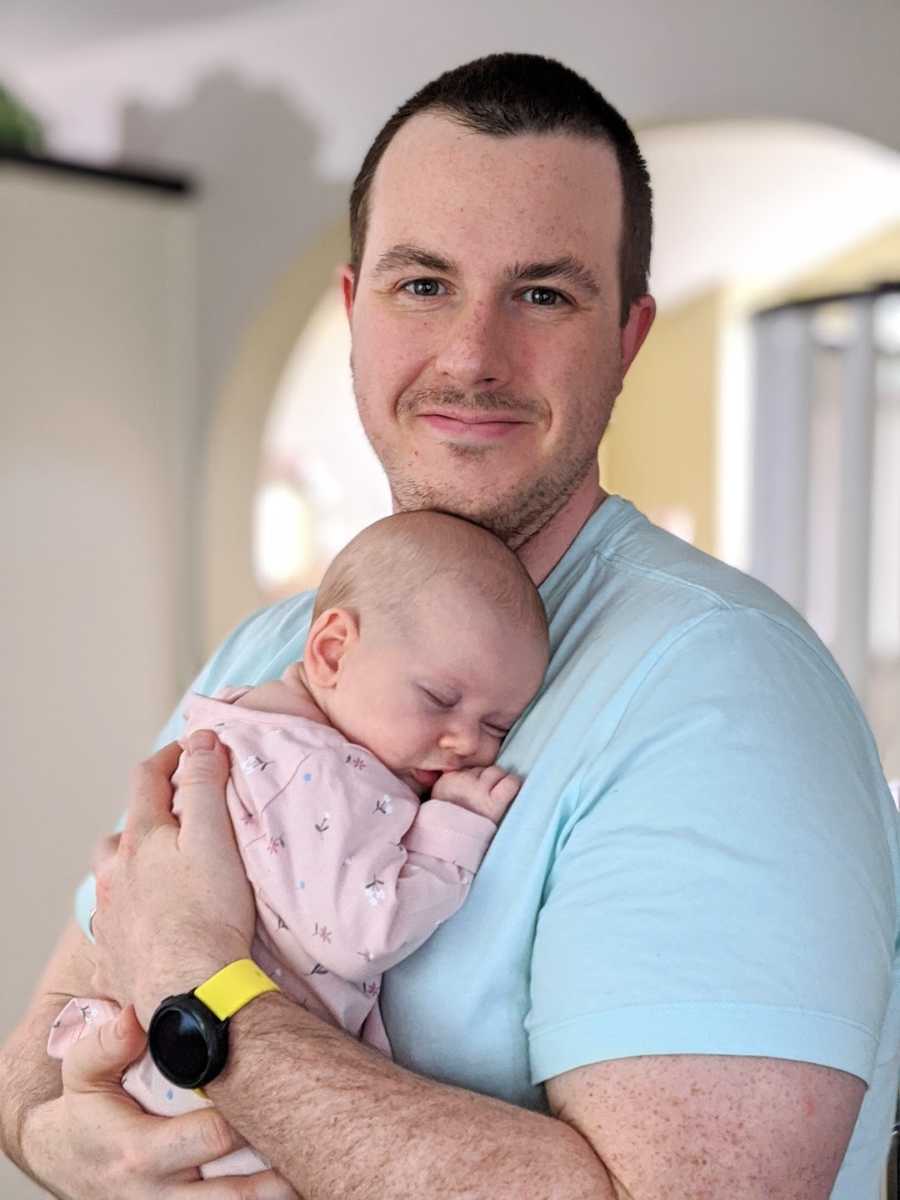
I had a lot of milk, more than Nina was able to eat. I was dumping all leftovers until a friend of mine mentioned her milk dried up a couple of months after giving birth. It got me worried. I wanted the best nourishment for my baby girl, and I knew breast milk was better than formula. I was committed to pumping if my body would let me, I wanted my milk to last at least until she turns 1.
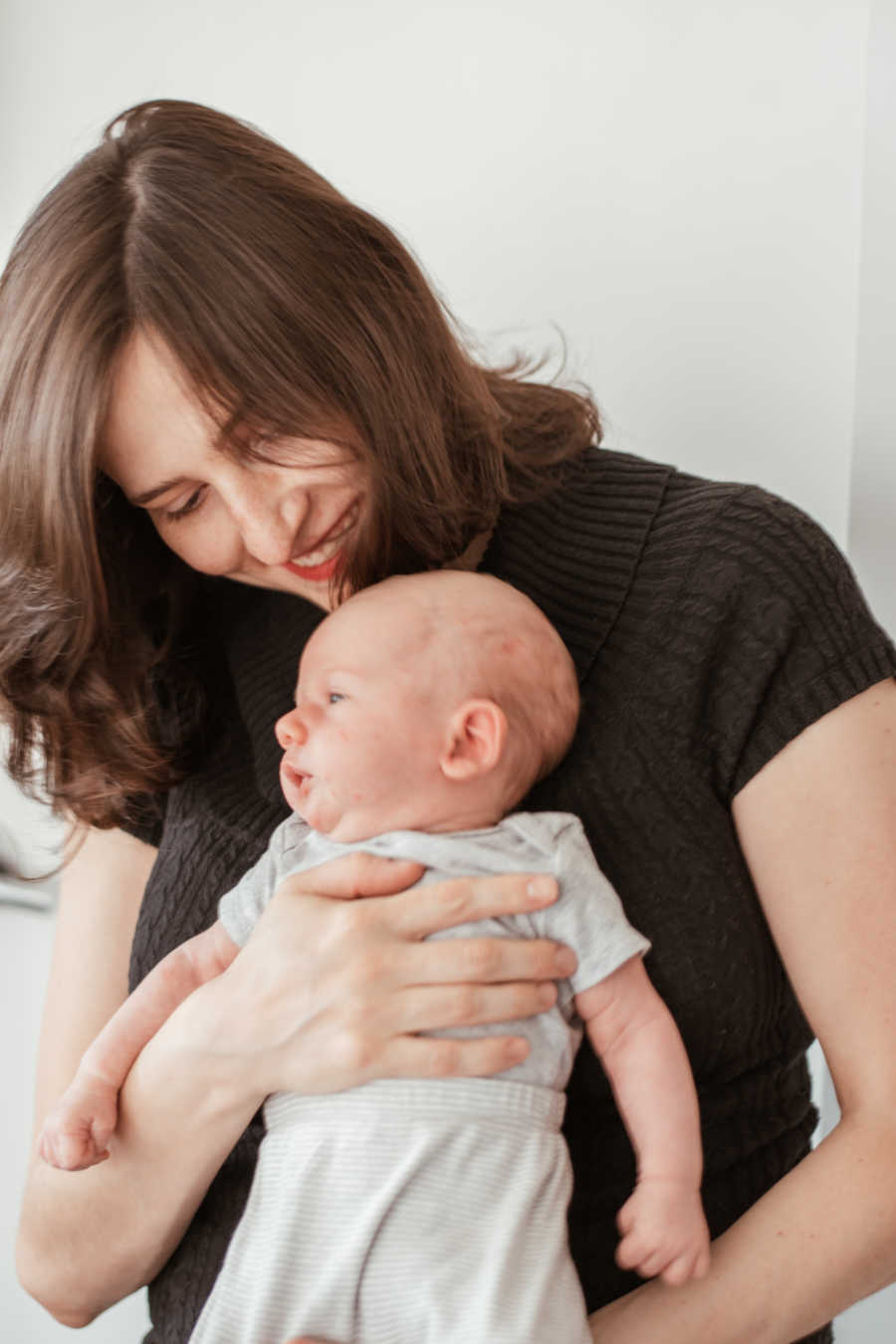
That’s why I bought the breast milk storage bags and started building a stash in the freezer. After about 3 months, the bags with breast milk took over our freezer. There was barely any room for anything else. That’s when I started looking into donating breast milk. I had too much. At that point, I was confident I would be able to build a new stash quickly.
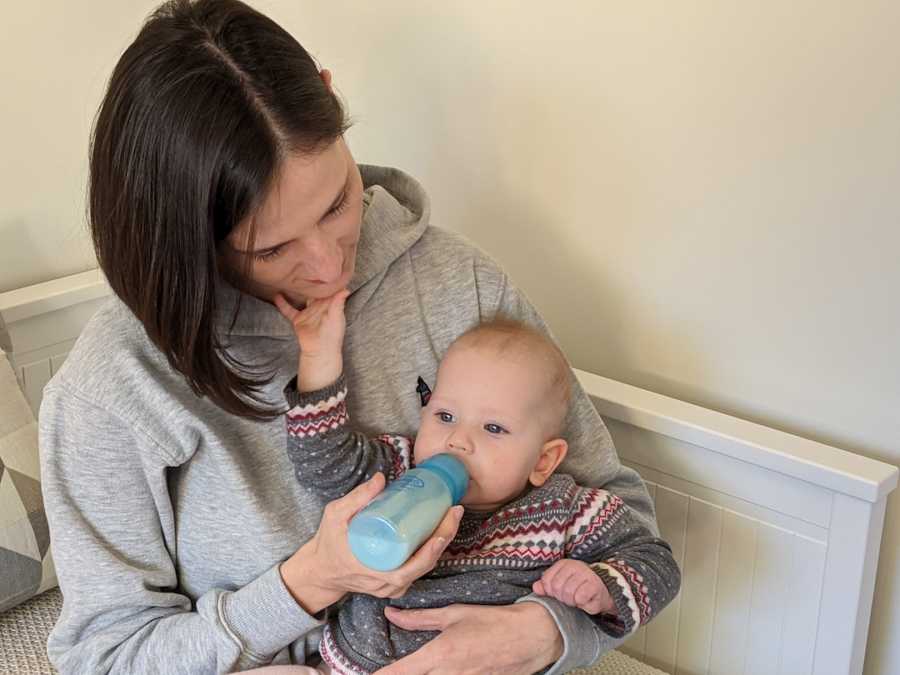
I had no idea where to start, where to go, and who to ask for help. I did not know anyone who was pumping, let alone donating breast milk. None of my friends pumped with their babies. I decided to ask on Facebook, in the closed group of moms who had babies of Nina’s age. Due to the pandemic, this was my only way of communicating with other new moms. They recommended a couple of groups on Facebook that were all about donating breast milk, and there is a separate group for each Province.
I was not sure if I should just post something on Facebook. By that time, I’d read some stories there were people who would get breast milk and then try to sell it to someone else. I wanted my breast milk to get into good hands, to someone who desperately needs it, and I did not understand how people could agree to take my breast milk for their little ones without even knowing if I was healthy enough, especially during the pandemic.
What if I was smoking a pack of cigarettes a day and drank a bottle of wine every night? I needed some reassurance I am not just getting rid of extra milk, but I am helping someone who needs it, and this someone trusts it meets the required health and quality standards. If I were the one in need of milk for my baby, that’s exactly what I would want.
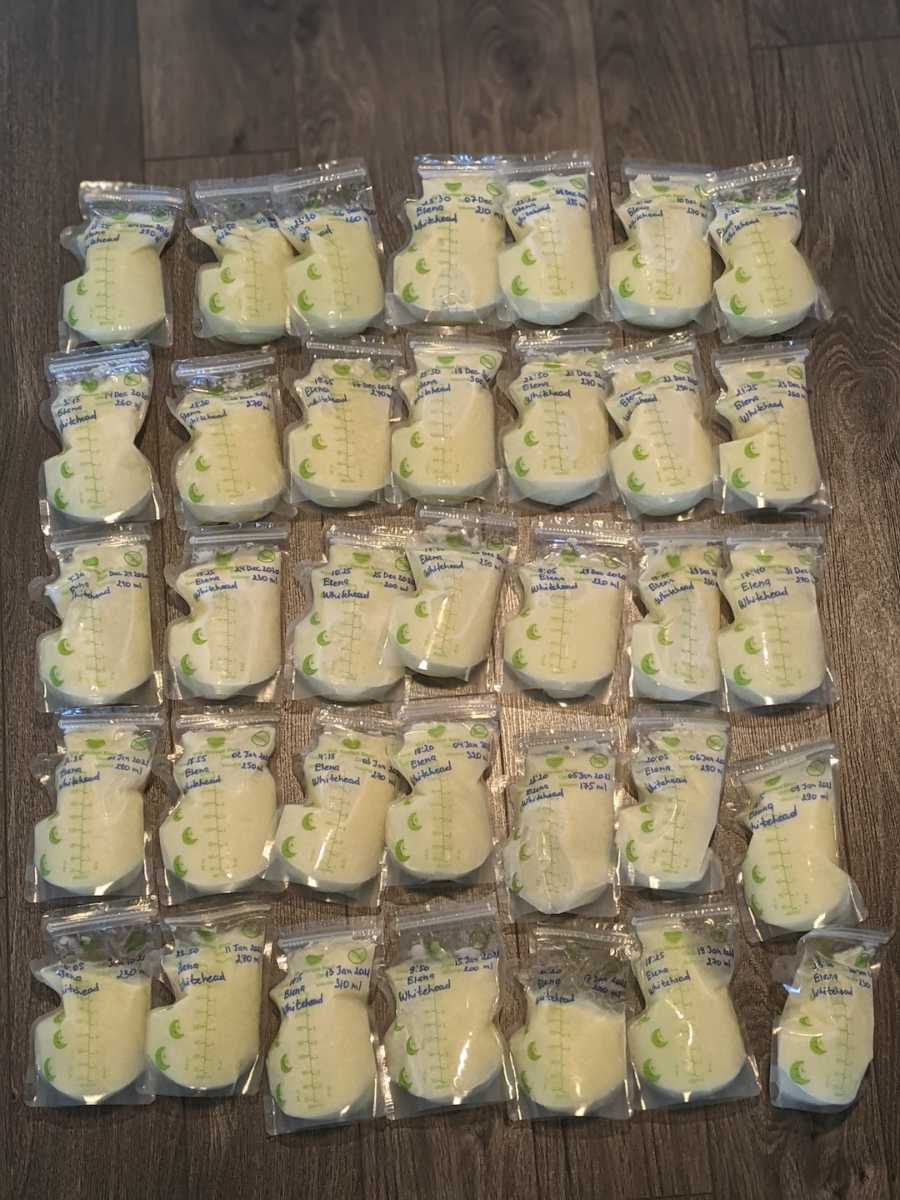
I became a breast milk donor, giving over 50 litres so far, wand I’ve learned that pumping is a powerful third options alongside breastfeeding and formula.