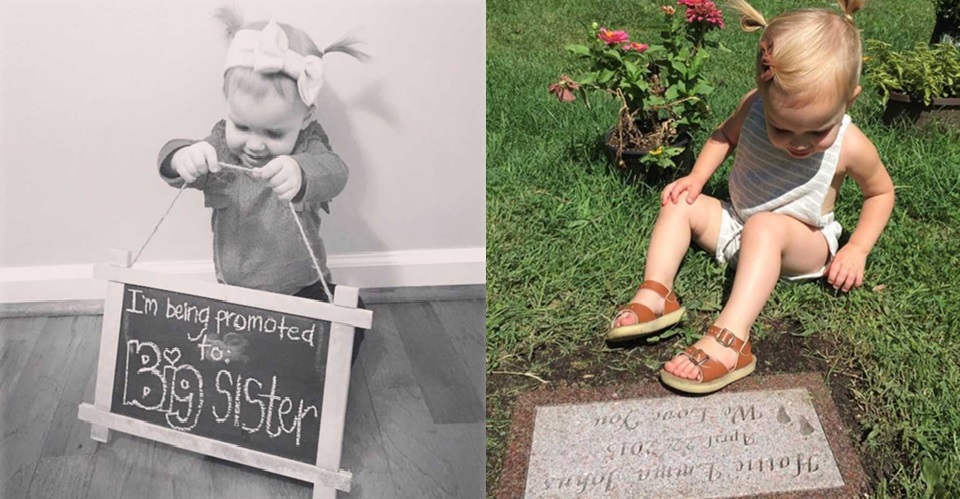
She had never shared her whole story with anyone. It was not an easy story to go back to, but it was her choice to share it, hoping others who had also had similar experiences might not feel so alone in this club no one gets invited to.
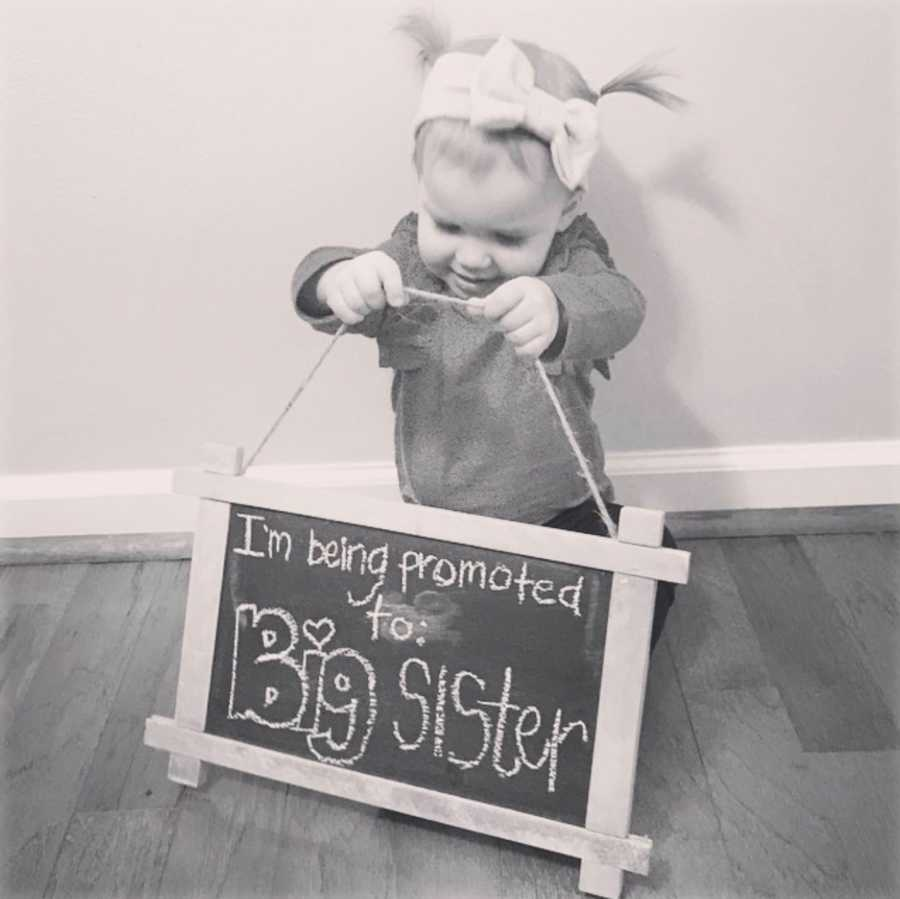
But then Kennedy was just a little over a year and a half, and she and her husband wanted to have additional children. Pregnancy came easily the first time, and they were consumed with overwhelming joy at the thought of Kennedy becoming a big sister and watching their family grow so easily. Pregnancy was normal at first—morning sickness and being tired; nothing out of the ordinary. But at around fifteen weeks, she began to experience a small amount of bleeding when using the bathroom.
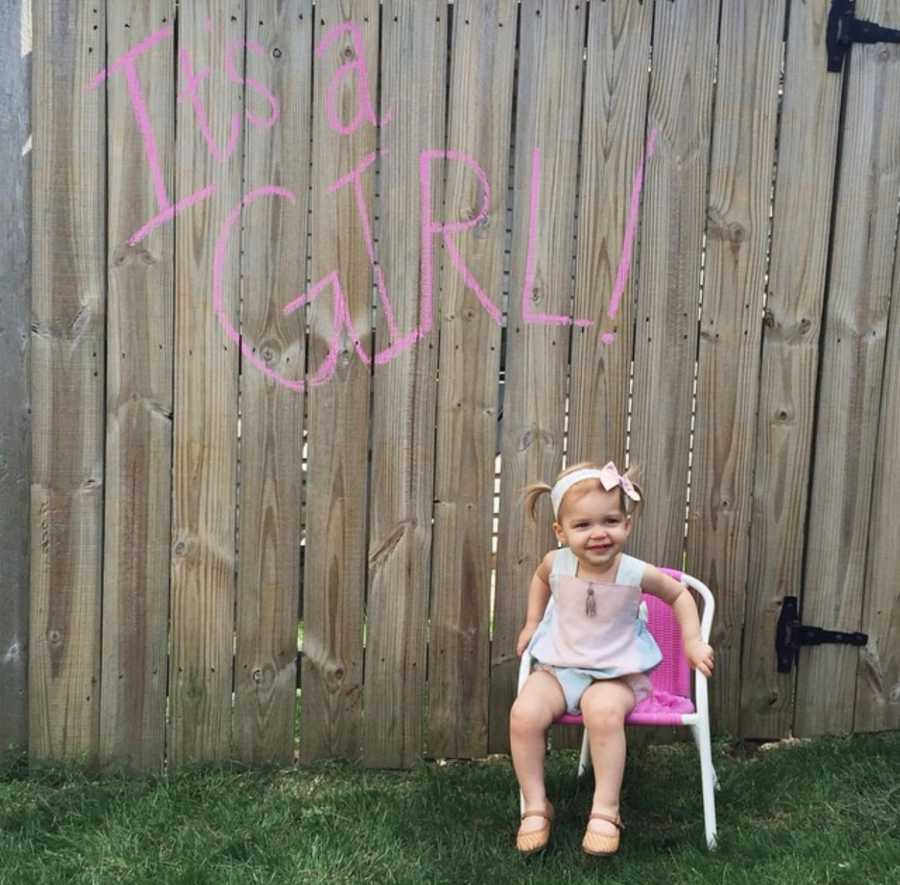
But one morning, she noticed that her blood was a different color. It was darker. Her husband was already gone to work when she realized that something was wrong. Panic set in as she called her OB and sobbed in her bed until her husband could return and take her to her office. There, she was diagnosed with placenta previa and put on pelvic rest. But amongst all these worrisome moments, they found out that she was going to give birth to a girl. They named her Hattie.
Bleeding persisted, and a week later, she was started on moderate bed rest. No lifting Kennedy. No prolonged standing on her feet. Travel arrangements had to be canceled in case there was any hemorrhaging. How unnecessary that seemed then. Placenta previa was a condition that was controllable—hazardous to her, maybe, but not the kind that would hurt her baby. And then came Easter Eve 2015.
She came to in the middle of the night, dripping in blood. She called for the hospital as she made her way to the bathroom. This time she made it in her towel and her husband as they left the house with her mother-in-law taking care of Kennedy. The drive to the emergency room was agonizing. In her heart, she thought that she could very well be pregnant and give birth to the child in heaven. She felt guilty in the hospital receiving treatment for magnesium.
She was released after a number of days, but was back a couple of hours later because of the heavy bleeding. Back at the hospital, she received Procardia and found that her levels of amniotic fluid were low. Visiting the hospital at the age of twenty weeks, relief from the bed rest was what she expected. Instead, anxiety grew.
In the early hours of April 22nd, she woke up with cramps. Alone, with her husband away, she knew something was not right. In the hospital, the ultrasound came with terrible results – there was no fluid left in the womb. Just the top of Hattie could be seen. A specialist confirmed what was feared – Hattie had a chance of being alive at one percent.
Grief counselors came. Talk turned to delivery and goodbye. She waited, poised between hope and sorrow. Later that day, she sensed Hattie’s movement for the very first time and what would be her last. Labor started shortly after, and delivery took its time. It was an “electronic stillness.” Then at 11:06 p.m., Hattie arrived. She weighed 7.6 ounces and measured 8.5 inches long. She was “tiny, perfect, and still.”
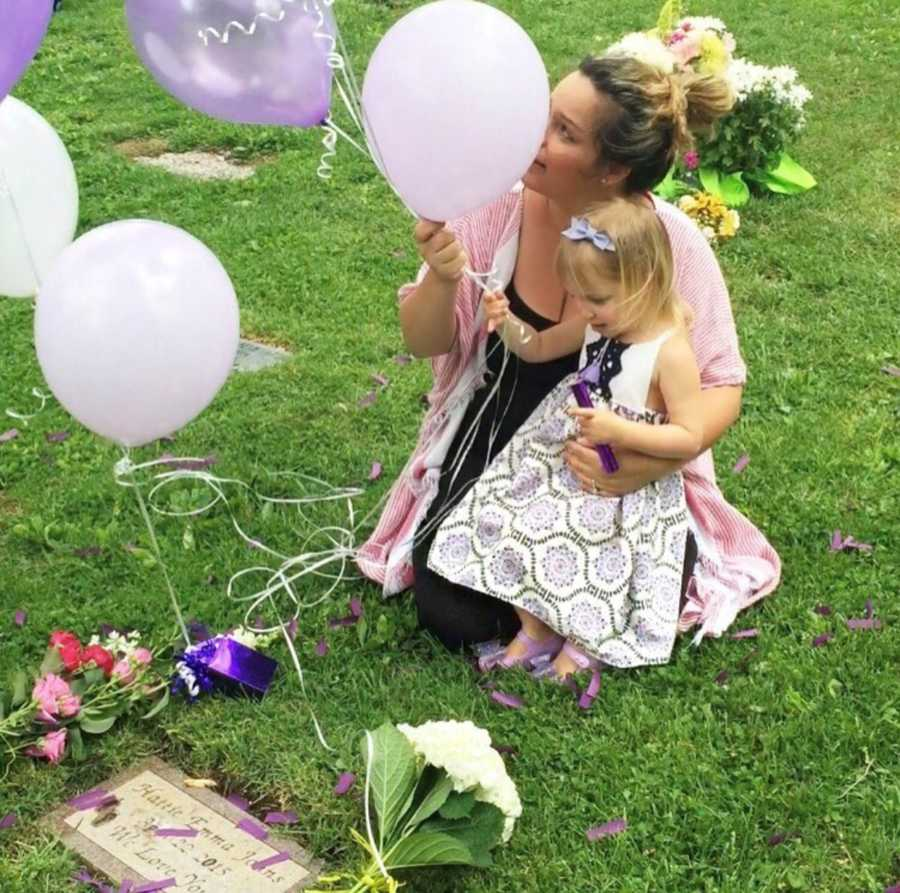
She hugged her daughter for hours, committing every detail to memory. Hattie is buried in the local cemetery’s “Babyland.” Her gravesite is often visited. Kennedy often mentions her mother’s visits. The questions never end, yet the healing grows. Grief is a lifetime experience. She shares her personal experiences to remind people they are not alone. There are people around them who have faced the same situation, and she could be one among four, but she has broken the silence.