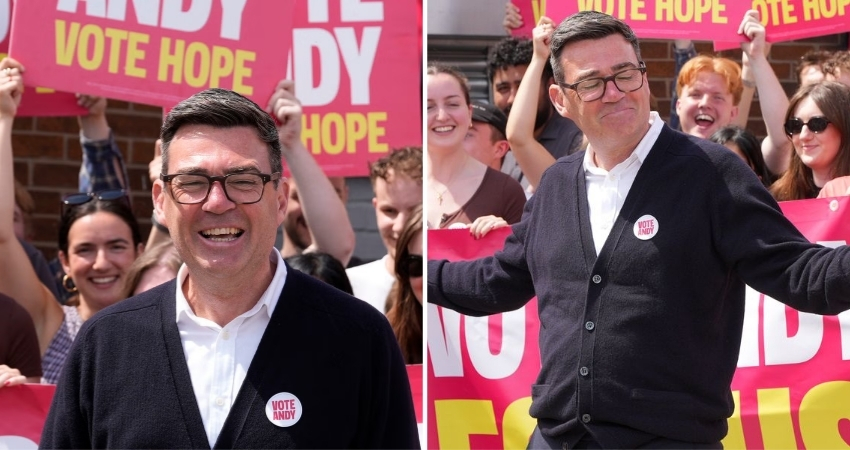
How on earth did it come to this? One of the most forgettable, uninspiring prime ministers in recent memory has been swapped out for what some see as a younger mirror image – the underwhelming, awkward, and equally unremarkable Andy Burnham.
Or “Andy Capp”, as one columnist dubbed him. And that label is already catching on, because Burnham has long been portrayed as a pint-and-chat politician – more comfortable talking football and music than gripping the hard machinery of government.
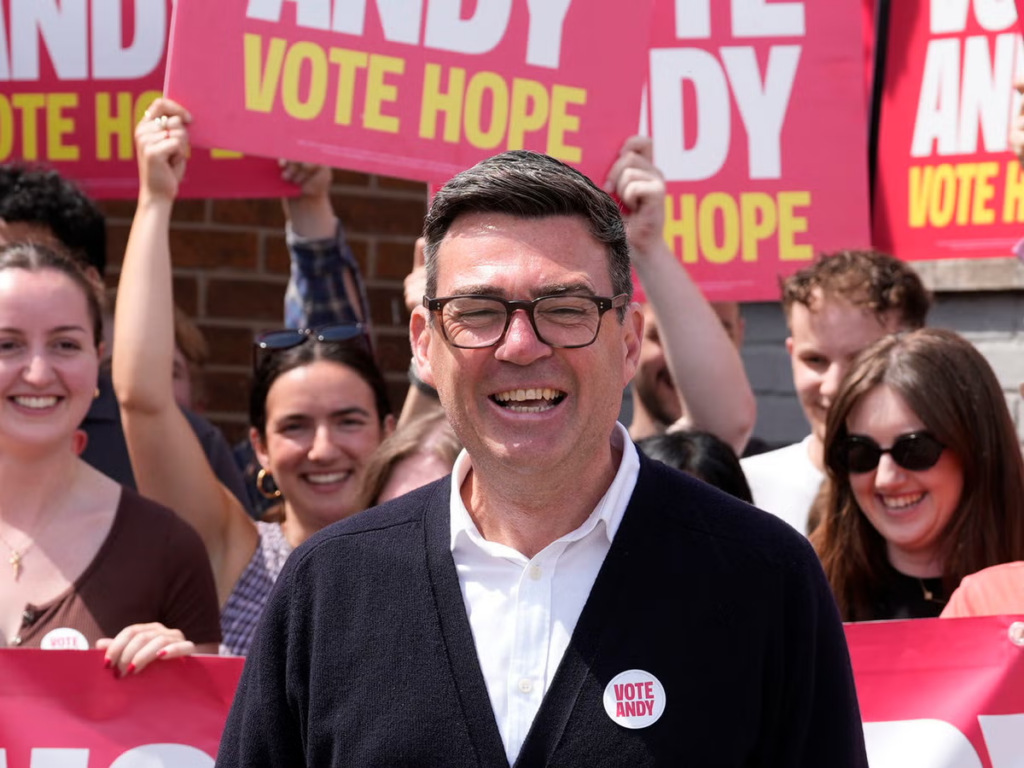
He’s certainly a bit more human than Sir Keir in front of a camera, but when the questions get tough, he often looks like someone caught off guard, scrambling for footing rather than offering answers.
Yes, he can talk about how broken politics is, how broken the country is. The problem is he rarely offers anything concrete about how to fix it.
For most of the last decade, he’s been away from Westminster, running a large city-region. Even that record is, at best, mixed. Yet now he’s being tipped as the man to walk into Downing Street and deal with a political and economic mess of enormous scale.
The concern for critics is simple: he arrives with little obvious team, no fully formed programme, and more vibe than policy. Whatever “northern charm” he has doesn’t automatically translate into credibility on the global stage.
He has spent years outside frontline national politics, building a reputation as a regional leader and at times a populist voice on the left. Supporters see that as fresh energy. Others see a lack of readiness for the top job.
Inside Labour, however, some MPs appear convinced he is the answer. And that confidence alone raises questions about the depth of talent available and the state of the party’s judgement.
Not everyone remembers his time in government as successful. His critics say he was often cautious, politically flexible to a fault, and reluctant to own difficult decisions. Supporters would argue he was operating in a complex system with limited room to manoeuvre.
Either way, the concern remains that he is more comfortable adapting to the mood around him than setting a clear direction of his own.
His past leadership attempts also tell a story: twice a contender, never the chosen one, once finishing well down the field, another time losing to Jeremy Corbyn in a very different political moment. To some, that suggests inconsistency rather than conviction.
There’s also a broader question about what kind of leadership Labour is actually searching for. Burnham is often described as a “big personality” in a party that, critics say, has struggled to produce figures with strong authority and clarity.
After losing out in Westminster, he rebuilt his career in Manchester, taking on the mayoralty and finding a platform that suited his style. Supporters point to that as proof of resilience; detractors see it as a retreat to safer ground.
Now, after years away from the centre of national power, he is being spoken about as a potential occupant of No.10. For some, that feels like a bold reset. For others, it feels like a leap into the unknown.
The uncertainty is the point. Nobody is fully sure how he would handle sustained pressure at the highest level, or how he would be received on the international stage, where charm alone rarely carries much weight.
There are also ongoing debates about his record in local office. Supporters highlight his role in championing victims’ causes such as Hillsborough. Critics, however, point to controversies and failures in policing and safeguarding systems during his wider time in public service, arguing that accountability has not always been clear or consistent.
Taken together, these arguments fuel a bigger claim from opponents: that he has not always shown the decisiveness or grip required for leadership at the very top.
There is also a democratic argument being made – that someone who has not recently faced a national election for prime minister is being elevated through internal party dynamics rather than a direct public mandate.
Whether that matters depends on perspective. But the bigger question remains unchanged: is he genuinely the best Labour can offer?
Some want to believe he could be a reset from the current direction. Others see continuity rather than change – a politician shaped by compromise, party management, and shifting positions rather than a fixed governing vision.
And in the background sits a harder fear from critics: that whoever leads next will inherit huge economic pressure, strained public finances, and difficult choices on tax, spending, and debt – without a clear plan for how to navigate them.
For now, Burnham remains a potential future figure rather than a confirmed one. But the fact his name is even in the frame says a lot about where the debate has got to – and how uncertain the next chapter of leadership really is.I’ve seen Andy Burnham up close. Trust me, the so-called “King of the North” isn’t up to the job.