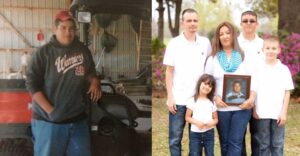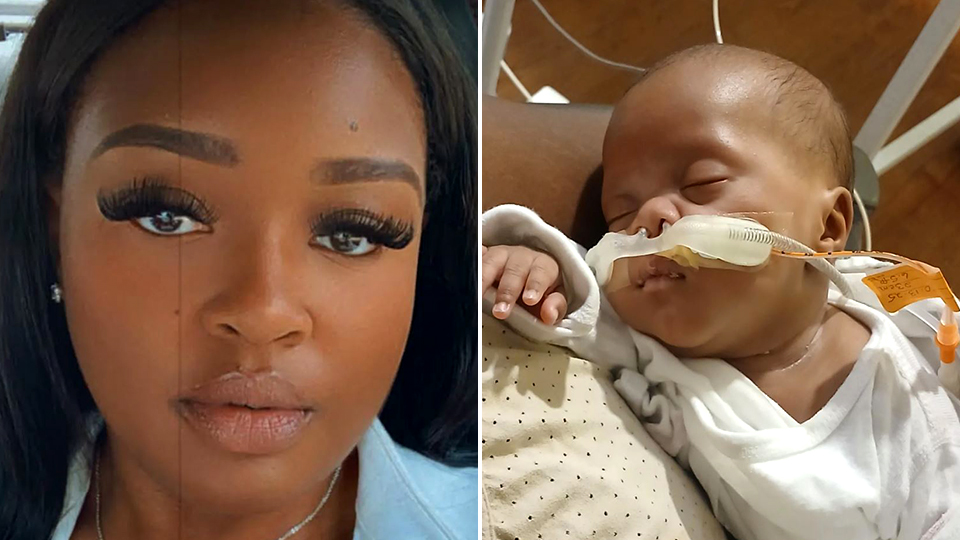
When April Newkirk walks into the NICU, she moves slowly, as if every step might stir the delicate balance keeping her grandson alive. The room hums with soft alarms and the steady rhythm of machines—sounds she has learned to both dread and depend on. In the center of it all lies Chance, her daughter Adriana’s baby boy, wrapped in tubes and wires that look too big for his tiny, determined body.

Chance wasn’t supposed to be here—not like this, not without his mother’s warm hands cupping his cheeks. Adriana Smith, a bright and gentle nurse from Atlanta, had always dreamed of raising children. But in February, when blood clots stole the oxygen from her brain, doctors told the family words no mother should ever have to hear: she was gone. Brain dead. Irreversible.
Yet eight weeks pregnant.
April remembers the moment the doctors explained the law, their voices quiet, almost apologetic. Georgia’s abortion ban meant Adriana had to stay on life support—not for her own chance at survival, but for the life growing inside her. April had stared at her daughter’s still face, whispering, “My baby’s breathing, but she’s not here.” The sight of the ventilator rising and falling her chest felt like a cruel illusion, a kind of cruelty she never imagined she would witness.
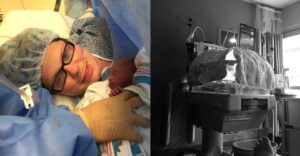
Months crawled by in a surreal stretch of waiting—waiting for viability, waiting for clarity, waiting for a miracle big enough to make the heartbreak feel purposeful. And then, on June 13, under the bright, sterile lights of a hospital operating room, Chance entered the world by emergency C-section, weighing just 1 pound, 13 ounces. A baby born into grief, lifted immediately into hope.
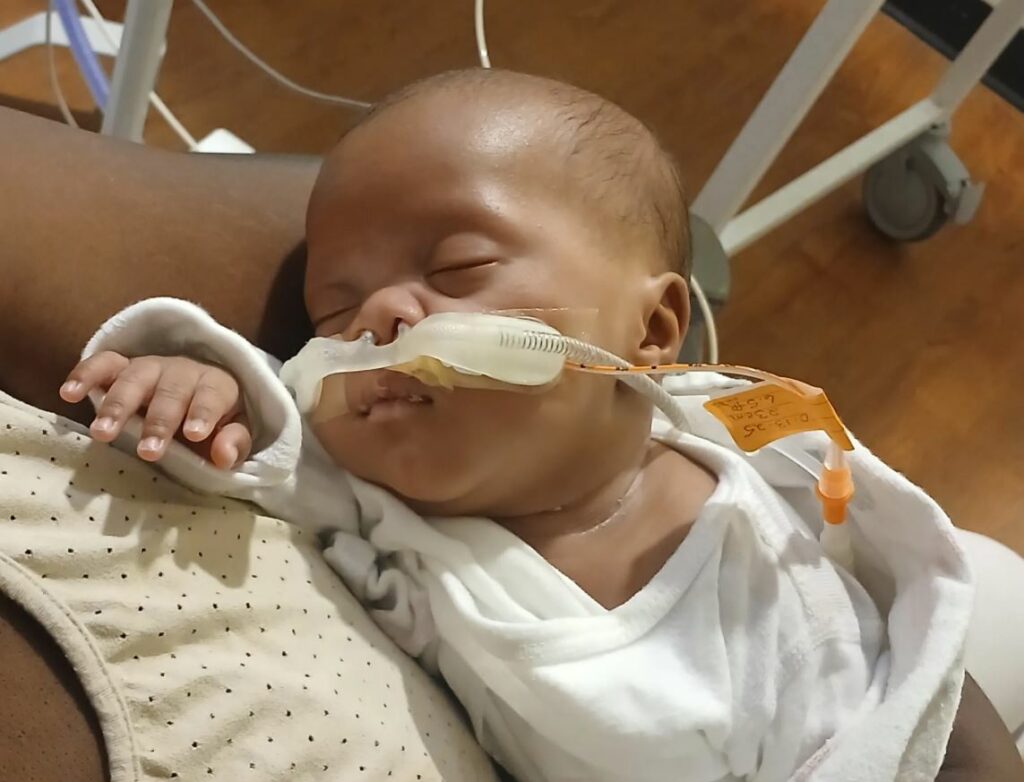
Six months later, Chance has grown to 11 pounds—small victories measured in ounces and breaths. But his lungs, never given the full time to bloom, struggle with every inhale. April posts updates online, trying to stay strong for the strangers who have become part of her support system. On November 24, as holiday lights began appearing in windows she passed on the drive to the hospital, she wrote, “It’s holiday season and I’m very down.” It was the kind of honesty only a tired heart can muster.
Chance is being moved to another hospital now—a place with more specialized care, more hands trained to help his fragile lungs learn to work on their own. April calls it “another chance for Chance,” clinging fiercely to the name her daughter chose. “Continue to pray,” she asks gently. “God has the final say so.”
The broader world knows Adriana’s story because of the legal questions it raised—when life begins, who gets to decide, what mercy looks like when laws and loss collide. But for April, the debates feel distant, almost abstract. Her reality isn’t on a podium or in a courtroom; it’s in a NICU room where she strokes a baby’s tiny fingers and whispers promises into a silence that aches.
She hasn’t stopped grieving her daughter. Maybe she never will. But every day she sits beside the crib, she chooses to love the boy who survived his mother’s stillness. Chance breathes through machines now, but April believes one day he might breathe on his own—proof that even in the wake of the unthinkable, something tender can still push its way into the world.
And so she waits. She watches. She hopes.
Because this little boy, born of tragedy and held together by love, is still fighting for his place in it.