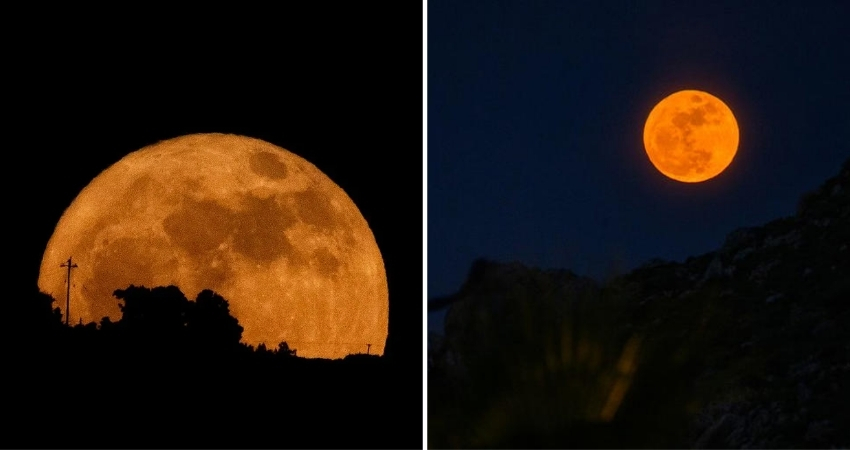
Britons are being urged to look up next week for a chance to witness a rare celestial event as June’s full moon lights up the night sky — a spectacle that won’t return in the same way until 2043.
Skywatchers will have the opportunity to see the famous Strawberry Moon reach full brightness next Monday (June 30), marking one of the most recognisable lunar events of the year.
The Strawberry Moon will be the seventh full moon of 2026, following an unusual May that saw two full moons. In the UK, it is expected to reach peak visibility at 12:57am on Monday, provided skies remain clear.
According to astronomy expert Alan Jones of 365 Astronomy, the name “Strawberry Moon” comes from Native American traditions and seasonal farming, linked to the time of year when wild strawberries ripen.
For generations, full moons have been named after seasonal changes, farming cycles, and natural events.
Despite its name, the Strawberry Moon will not actually appear pink or red like a strawberry.
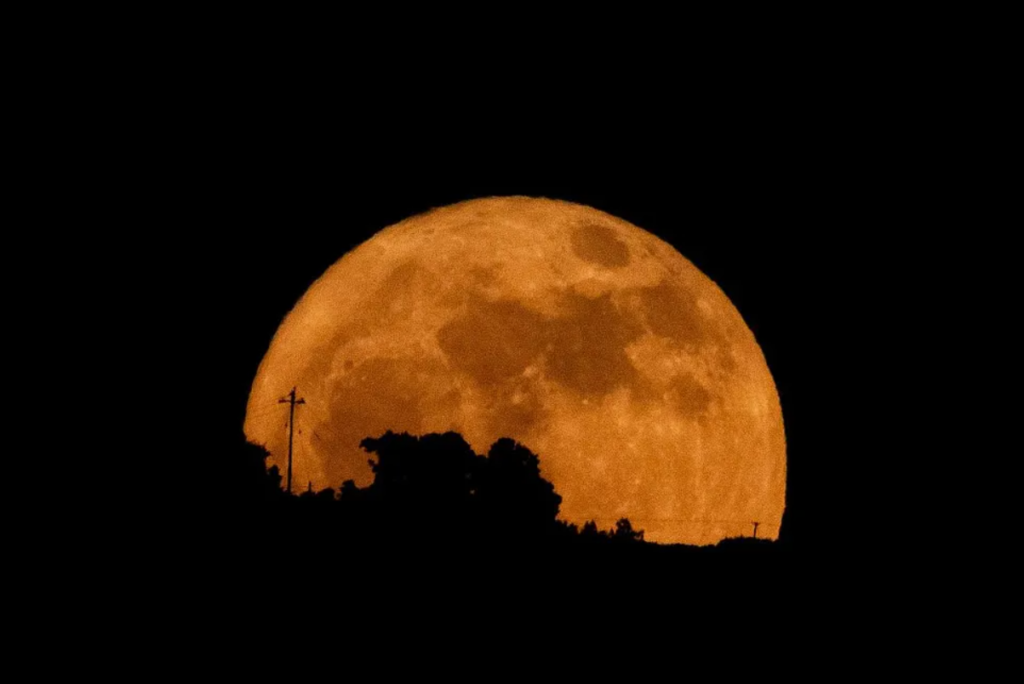
Instead, any golden, orange, or reddish glow comes from atmospheric conditions rather than the moon itself.
Mr Jones explained: “The Moon itself doesn’t change colour because of its name. Any orange, red or golden appearance is caused by the way Earth’s atmosphere scatters light when the Moon is low on the horizon.”
These effects are strongest when the moon is closest to the horizon, creating the dramatic view many people expect.
“The best time to view the Strawberry Full Moon is at sunset on June 30,” Mr Jones said.
“That’s usually when it looks most striking because it sits lower in the sky and atmospheric effects are at their strongest.”
For the best view, he recommends finding spots with a clear, open horizon.
Open countryside, beaches, hills, and parks are among the best places to watch the event.
He added: “Telescopes and binoculars can show extra detail, but the Strawberry Moon is best enjoyed with the naked eye.”
Jones noted that June’s Strawberry Moon is one of the easiest astronomical events to enjoy.
“You don’t need special equipment or expert knowledge. If the sky is clear, just step outside, look toward the horizon, and enjoy one of nature’s most iconic celestial displays.”
In London and across the UK, viewers looking east or south-east around sunset should be able to watch the moon rise and climb higher through the evening.
Clear skies could also make this a perfect photography opportunity, with skylines, buildings, trees, or open landscapes helping create dramatic shots.
The last full moon was the Blue Moon, which rose on May 31.
After June 30, the next full moons will be the Buck Moon on July 29, the Sturgeon Moon on August 28, and the Corn Moon — also known as the Harvest Moon — on September 26.