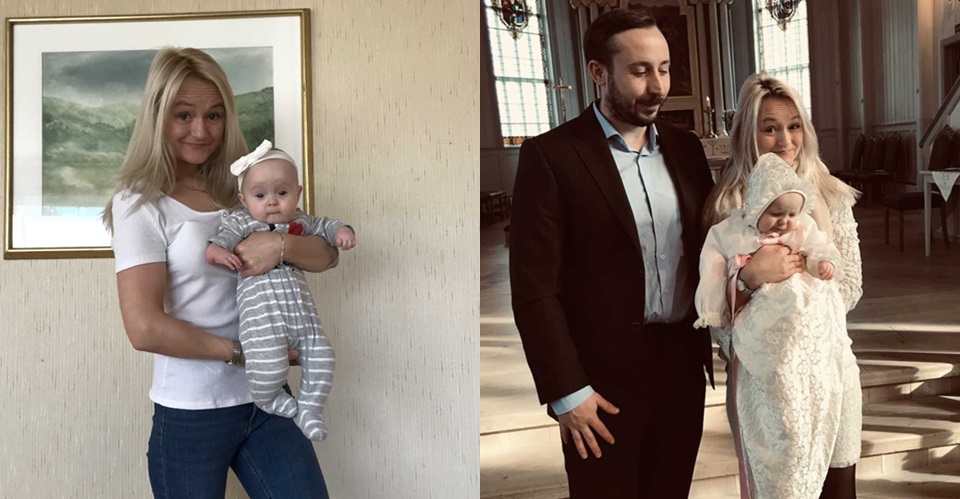
She is not defined by what is missing, but by everything she is ready to do. She is a 26-year-old from Hordaland in Western Norway. He is 32 and from Dublin, Ireland. They met in Fuengirola, Spain, where life was warm and easy. She had always dreamed of children and, when she met him, she was ready to trade constant travel for a quiet home and a family. After some months together, they learned they were expecting a daughter. With two countries between them, they had to choose where to raise her. They decided to start in Norway, a choice that later felt perfect when their baby arrived earlier than planned. Norway’s health system would prove a blessing. Their little girl, Mia, now holds Irish and Norwegian citizenship, so one day they might live in her father’s country too.
Her pregnancy felt almost effortless; she had no morning sickness, just a growing belly and the joyful rhythm of little kicks. Labor came as a surprise, two months early. She woke with mild back pain, the kind you get after a workout. At the hospital, doctors discovered labor had begun and transferred her to a unit equipped for premature babies. They tried to stop it, but Mia’s heartbeat dipped, and the team decided it was time. Even then, the mother struggled to believe it was real; the pain was so light that she now jokes that childbirth hurt less than stepping on a toy brick.
Mia arrived quickly. Placed on her mother’s stomach momentarily, it was clear that her right hand and foot were different. Nurses brought Mia to the neonatal intensive care unit for premature care and a closer look. The new mother had to wait an hour before seeing her, which felt longer than any day. The diagnosis was a congenital limb difference. No one had known before birth, which did not change the one truth that mattered: Mia is their daughter, perfect and loved exactly as she is. Apart from missing two bones, she was healthy and showed no signs of a syndrome.
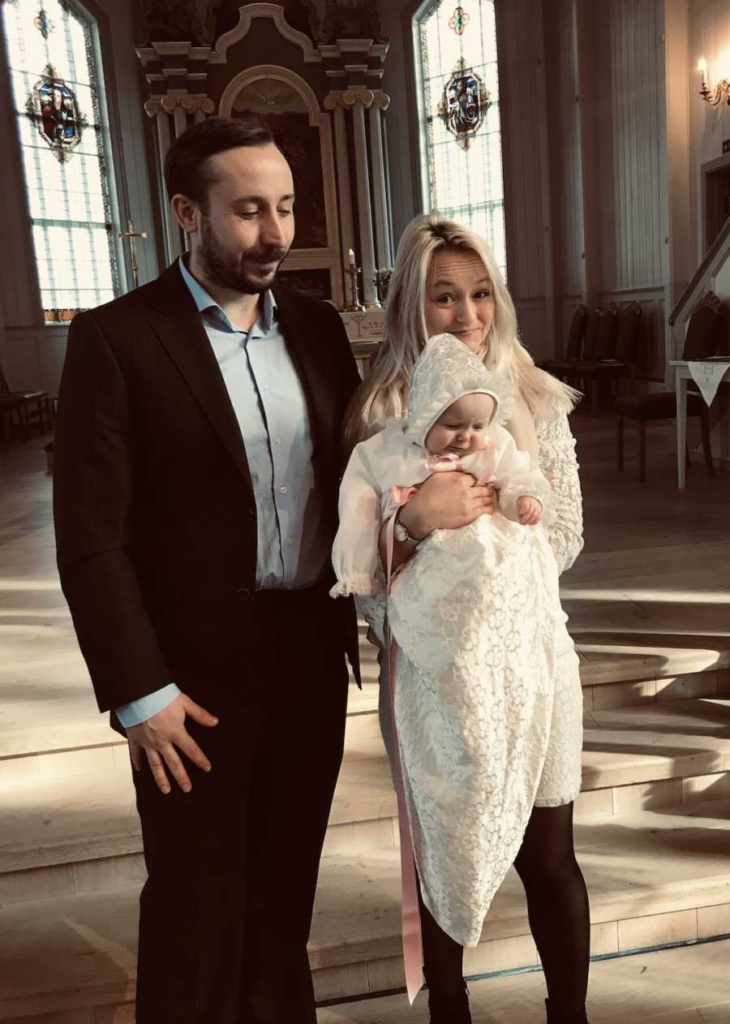
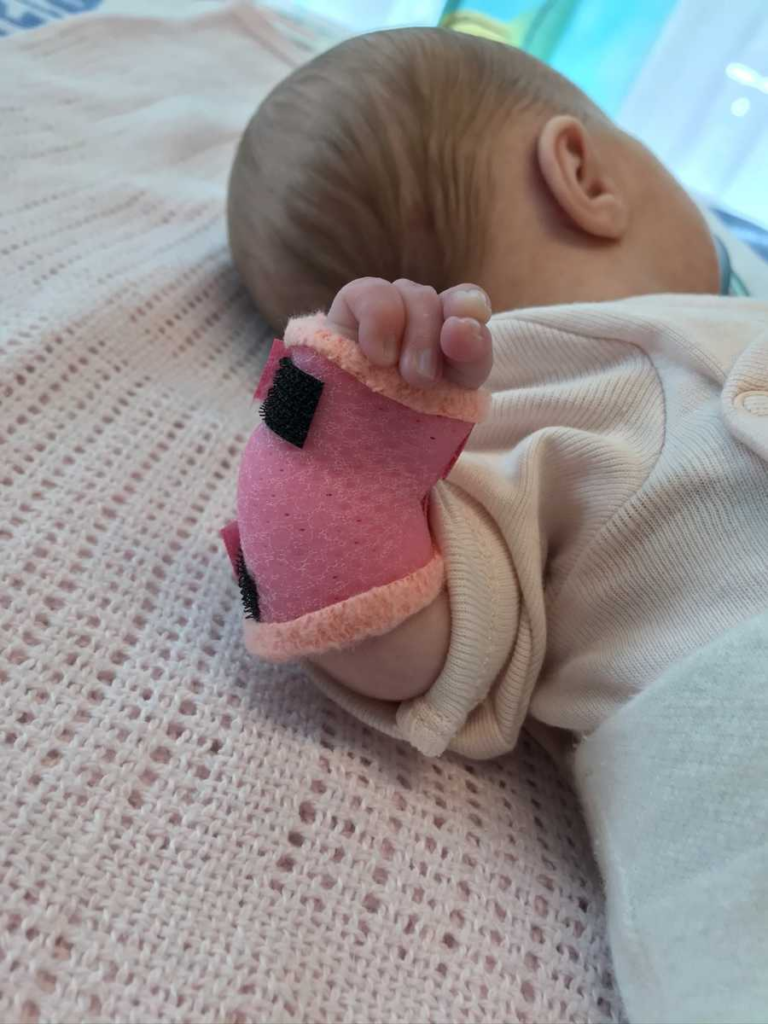
Specialists explained the details in simple terms. In her right arm, the bone on the thumb side, the radius, did not form, so Mia has no thumb, and her hand rests at a right angle instead of straight. She wears a gentle cast at night to coax her wrist toward a straighter position. When she is older, doctors can move one finger to become a thumb so she can grasp and play like any other child. For now, she manages beautifully with the hand she knows. In her leg, the thick bone from knee to ankle, the tibia, is absent, making the foot sit differently and making it impossible to bear weight. She will not be able to walk on it. The plan is to amputate at the knee so she can use a prosthetic. Far from dreading that day, her parents look forward to giving her a lighter limb and a steady path to walking. Starting with a prosthetic early means it will feel natural to her from the beginning.
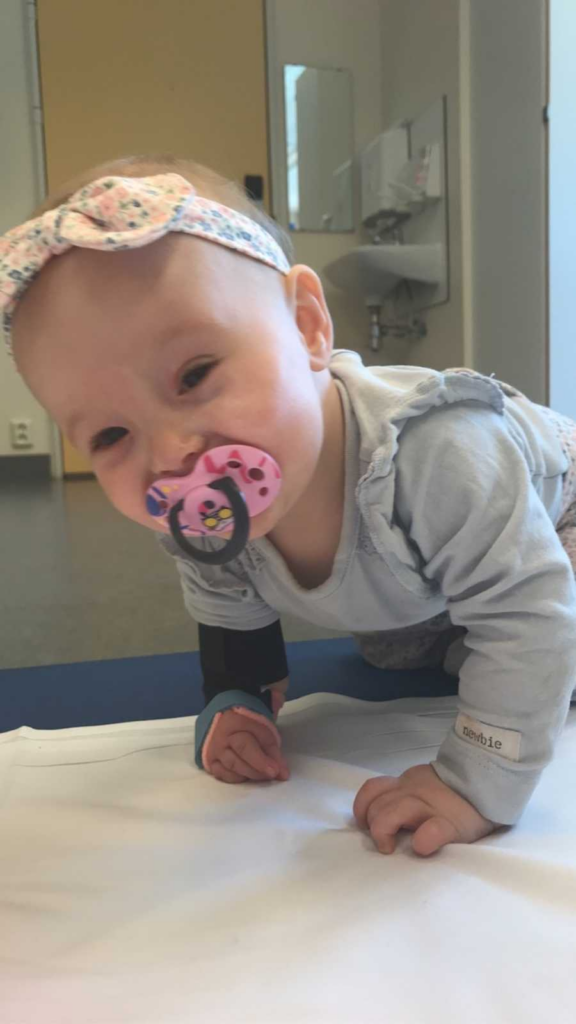
People sometimes ask hard questions. A nurse once called Mia “sick,” which stung. She is not sick. She is a healthy child who happens to be built a little differently. Others say the parents are extreme for handling extra appointments and surgeries. They disagree. All parents are strong, each in their own way. Mia needs what every child needs: love, patience, comfort, and a chance to grow. Life at home is sweet. Mia has slept through the night since she was tiny. She smiles easily and meets her milestones. She rolls, reaches, and learns like other children her age, finding her own methods with one whole leg and a uniquely shaped hand. When people ask how her parents train her to do all that, they smile and say they do not.
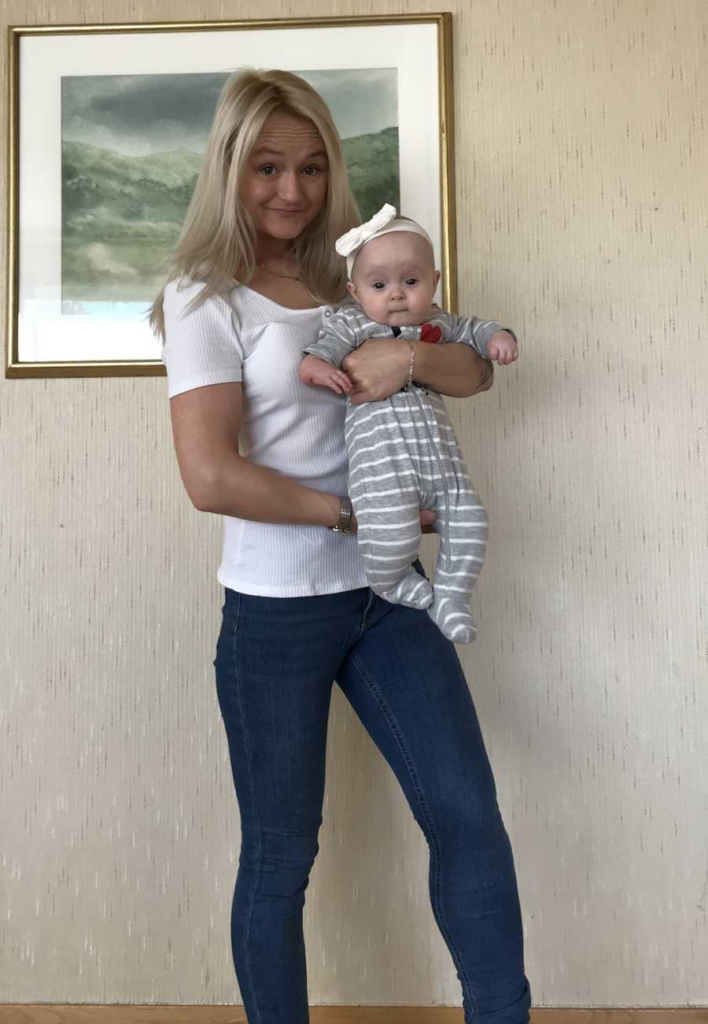
They simply let her be a baby. She figures things out on her own. Modern medicine will help with the rest. Between the cast, future surgeries on her hand, and a prosthetic leg, she will move through the world with confidence. What matters most is her steady message at home: you are exactly who you were meant to be.