She was only four, but the world had already convinced her she wasn’t enough. One afternoon, she looked at a photo of herself, tugged at the thin strands of hair on her head, and whispered to her mother, “Mommy, I’m ugly.” The words cut through the air sharper than any insult from a stranger ever could. Her small voice carried the weight of a storm no child should have, and her mother’s heart cracked wide open.

It wasn’t the first time this little girl had cried over her hair, or her lack of it. Kids had pointed and laughed at school and on the playground, telling her she looked like a boy. And even though children often don’t realize the sting of their words, their comments stick. They clung to her like shadows, following her home and slipping into her dreams at night. Her mom tried the usual lines we’ve all heard: beauty comes from within, happy girls are the prettiest, and everyone is special in their own way. But at some point, even her mother began questioning whether those words were enough anymore.
The truth was, her mom knew exactly how her daughter felt. She, too, had been a little girl with bare patches and no braids to twirl like the other kids. She remembered the shame, the desperate prayers for her hair to grow, and finally, the quiet comparison when every other girl seemed to look like the princesses in storybooks. Genetics, the doctors told her, was nothing serious, just one of those things. But try telling that to a four-year-old who only wanted to be Rapunzel.
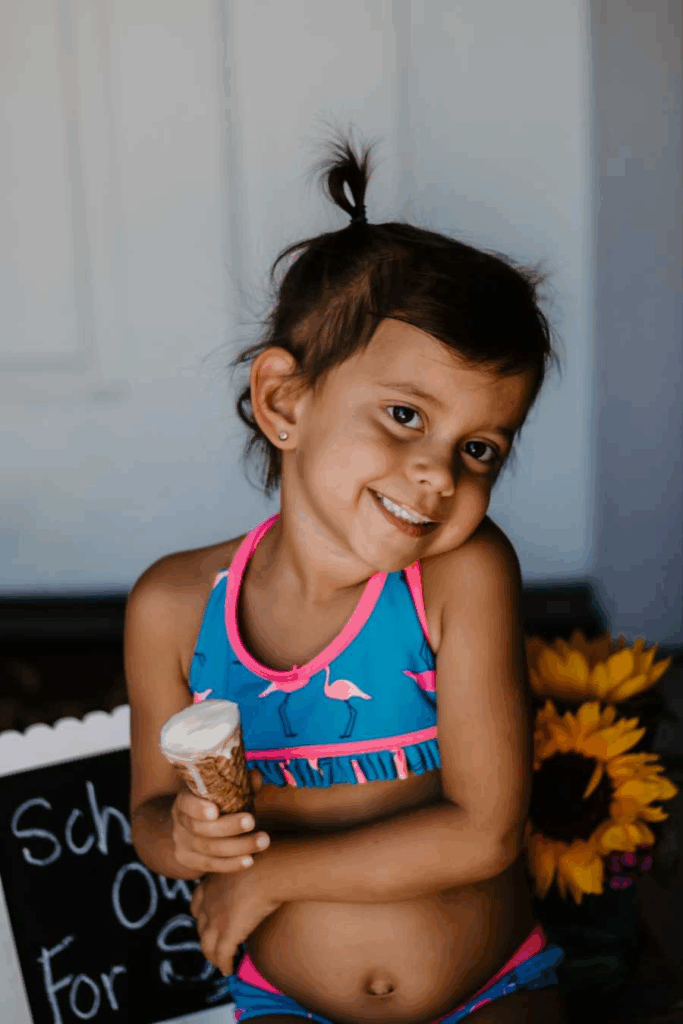
Some days, the little girl ran free, giggling across the playground without a care. Other days, a single cruel comment could send her crumbling. One afternoon after preschool, she ran to her mother, raincloud heavy above her tiny head. Her friends had told her she couldn’t play princess because she looked like a boy. That night, her mom tucked her in and tried to find the right words. She compared people to flowers: some with big petals, some with thorns, some fragile, some strong, but all beautiful in their own way. Her daughter listened, but still, the sadness lingered.
When the house was quiet at night, the mother replayed it all. The tugging at her daughter’s hair, the pleading eyes, the whispered prayers to God. She wondered if she had failed and if her insecurities had somehow planted roots in her little girl’s heart. Those questions kept her awake, staring at the ceiling, wishing she could fix something that felt much bigger than a hairstyle.
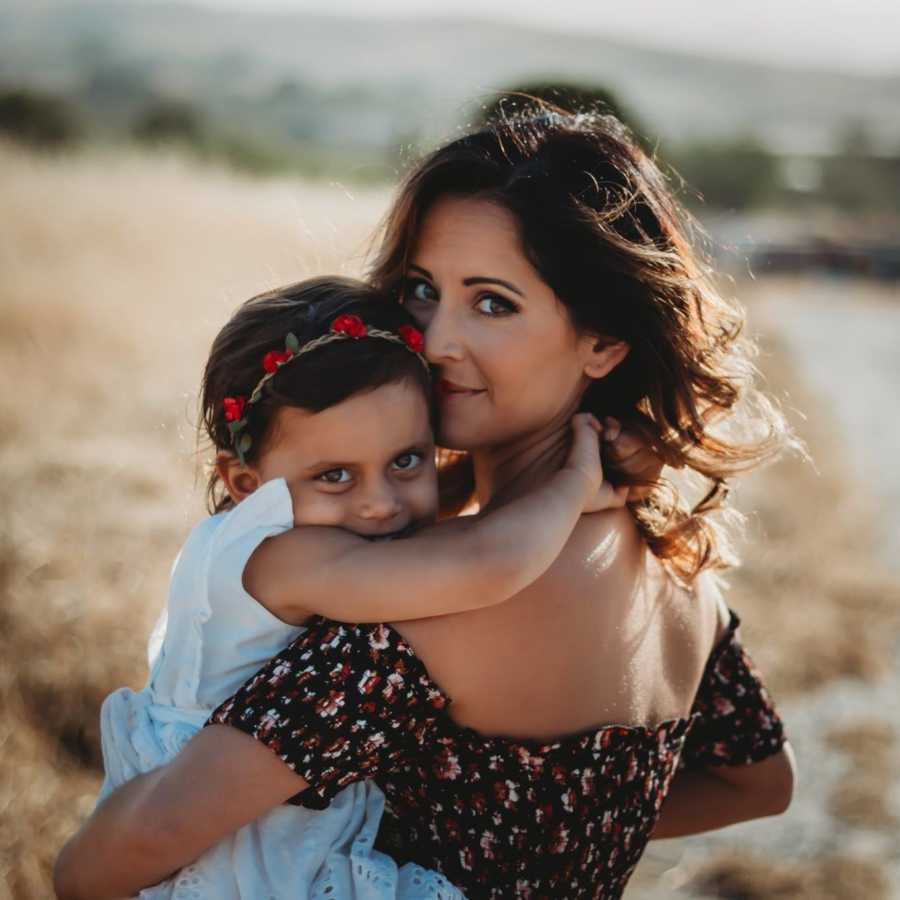
Then came the breaking point. Her daughter looked at another photo, surrounded by friends, and frowned. “Mommy, I look ugly.” Four years old, and already using that word. Ugly. The mother broke down, too. She couldn’t change genetics or magically make hair sprout overnight. But she could do something. After all, she used to be a hairstylist, and if she couldn’t give her daughter long golden locks, maybe she could give her something better.
So she let her pick her favorite color, pink. Together, they stained the little strands that she did have and brushed on the bright hue until it glowed like cotton candy. As the color settled, the sadness seemed to lift. The little girl giggled, twirled, and ran off to her room to stare into her princess mirror. Her mom peeked from the doorway and saw it: the smile, wide and unshakable, eyes that said thank you without words.
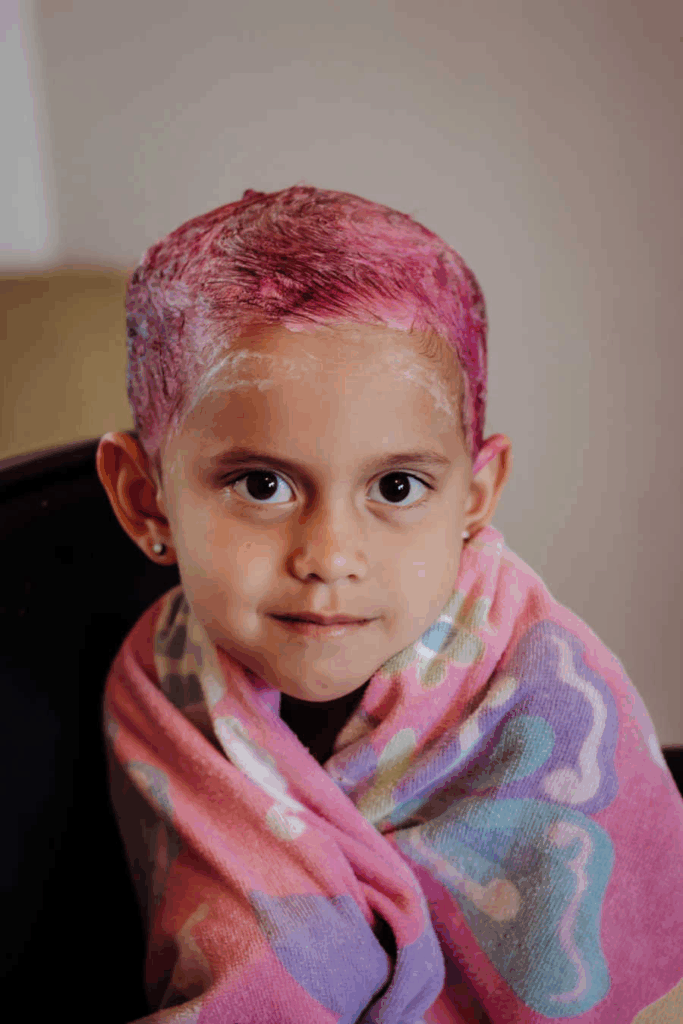
That day, pink hair became more than pink hair. It became proof that she was special, vibrant, worthy of joy, and that being different could also mean being magical. She danced around the house singing, “I have pretty pink hair!” and for once, the mirror reflected not what she lacked but what she had.
Of course, people had opinions. Some raised eyebrows, some muttered under their breath about what was normal. But her mom didn’t care. Those people didn’t see the tears at bedtime, the prayers for Rapunzel’s hair, the way a little girl begged to be beautiful. They didn’t see how one splash of color had given her back her confidence. And in the end, what mattered wasn’t what strangers thought, but how brightly her daughter now shone.
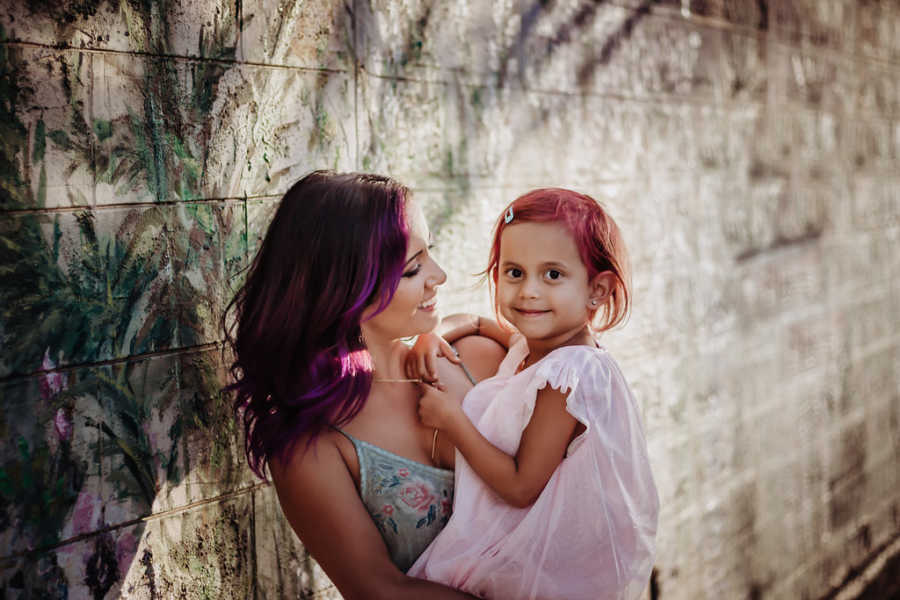
So the mom dyed her own hair purple to match. Sometimes, the best way to fight the world’s cruel voices is not with lectures or long speeches but with something as simple as pink and purple streaks in the summer sun.